This post may include affiliate links. We do earn a commission for products purchased using these links (at no additional cost to you). Thank you for supporting Swing Yard, making the content you see on this blog possible. For more information, please see our privacy policy for details.
*Read our review guidelines.
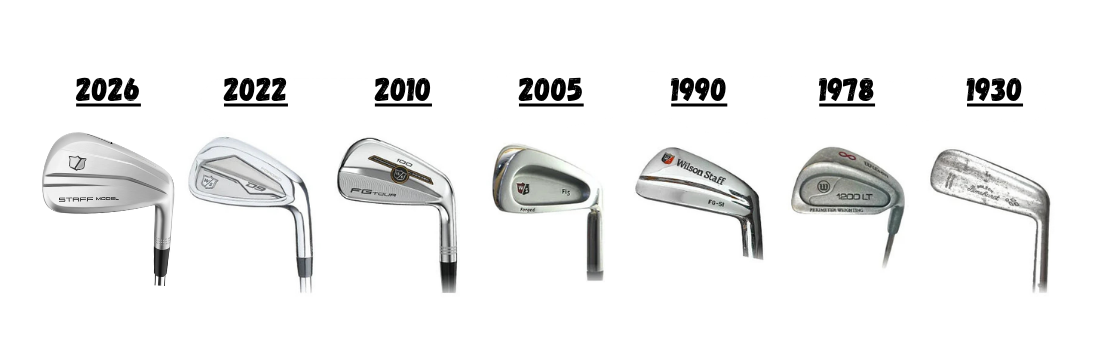
Wilson Irons by Year Table:
| Year Released | Wilson Iron Model | Club Attributes | Price / Where to Buy |
|---|---|---|---|
| 2026 | 2026 Staff Model CB | Forged 8620 carbon steel cavity-back with a milled face and Fluid Feel mass redistribution toward center. Reduced offset and a slimmer profile keep blade-like workability while a raised muscle cavity adds forgiveness. | |
| 2026 Staff Model XB | Forged hollow-body construction with a variable-thickness face built to push ball speed without losing tour-styled looks at address. Sits above the CB in forgiveness while staying compact through the cavity. | ||
| 2026 Staff Model Blade | Muscleback forged blade rounding out the 2026 Staff Model family, built for full workability with heritage cues like hosel knurling and longer ferrules. No face milling gimmicks, just feel and shot-shaping control. | ||
| 2026 DYNAPWR Forged | Cavity-back distance iron using AI-mapped face thickness and a perimeter-wrapping cup face instead of the prior generation’s power holes. A urethane-filled cavity quiets vibration for feel between forgiveness and tour touch. | ||
| 2023 | Dynapwr | Revived the Dynapower nameplate with Power Holes 3.0 and an AI-mapped face built around where mid-to-high handicappers actually make contact. Prioritizes ball speed retention from center to toe over a single sweet spot. | |
| Dynapwr Women’s | Women’s-specific build of the Dynapwr platform, with shaft weight and lofts tuned to typical women’s swing speeds. Keeps the same AI-optimized face flex as the men’s set. | ||
| 2022 | Staff D9 | Debuted an asymmetrical, heel-biased Power Hole layout generated through Wilson’s computer simulation design process rather than manual prototyping. Paired a lower center of gravity with a thin topline for higher launch without a bulky shape. | |
| Staff D9 Forged | Forged 8620 carbon steel version of the D9, combining its asymmetrical Power Hole flexing with the softer feel of a forged players iron. Bridges the gap between distance tech and traditional forged touch. | ||
| Staff D9 Women’s | Applies the D9’s heel-biased Power Hole geometry and lowered center of gravity to a women’s-specific shaft and loft setup for easier launch. | ||
| Launch Pad 2 (2022) | Reworked sole geometry to cut turf drag, producing shallower divots and less speed loss through impact. Mass pulled from the back of the head dropped into the sole to lower center of gravity for easier launch. | ||
| Launch Pad 2 Women’s | Same turf-interaction sole and lowered center of gravity as the standard Launch Pad 2, built into a women’s shaft and loft package for higher, easier launch. | ||
| 2021 | Staff Model Blades | Forged muscleback built to sit alongside the Staff Model CB as the pure-workability half of a matched two-iron system rather than a standalone release. | |
| Staff Model CB | Introduced Wilson’s Tri-Brace Stabilizer, an internal bar linking topline, sole and heel to bring blade-like sound to a cavity-back head. CNC-milled face and grooves with tungsten toe weighting in the long irons add stability. | ||
| 2020 | Staff D7 Forged | Added a urethane-filled Power Chamber behind a forged 8620 face, letting the sole’s Power Holes flex more freely for speed without sacrificing forged feel. | |
| Launch Pad (2020) | First generation of the Launch Pad name, built around a low, deep center of gravity and a simplified, super-forgiving shape for players who need the most help getting the ball up. | ||
| 2019 | Staff D7 | Thinner topline and less offset than earlier distance irons, forged from soft 8620 steel to bring players-iron looks to a distance-category club. | |
| Profile SGi | Complete-set iron with a thin, hot face and perimeter weighting for a wide forgiveness zone, packaged as part of Wilson’s beginner-friendly full box set rather than sold as a standalone line. | ||
| Profile Platinum | Positions mass low and back in the head for higher launch, bundled into Wilson’s entry-level complete set alongside a driver, hybrid and putter for golfers just starting out. | ||
| Profile JGi Junior | Scaled-down Profile head sized and weighted for junior swing speeds, built to make solid contact easier while a young player is still growing into the game. | ||
| Profile SGi Teen | Mid-length version of the SGi platform bridging junior and adult sizing, keeping the same forgiving perimeter-weighted head in a teen-appropriate shaft length. | ||
| 2018 | Staff D350 | Entry point of Wilson’s 2018 iron lineup, leaning on proven distance-iron geometry to hit a lower price point for super-game-improvement buyers. | |
| Staff FG Tour V6 | Highly polished, tour-styled players iron using tungsten weighting to build in forgiveness without bulking up the compact head. | ||
| C300 | First 8620 carbon steel iron to carry Wilson’s Power Hole face-flexing system, blending forged feel with the speed usually reserved for cast distance irons. | ||
| 2017 | D300 | Built on the C200’s FLX Face and Power Hole system with a more forgiving, distance-focused head shape aimed at higher-handicap players. | |
| D300 SuperLite | Lightweight D300 variant pairing the same FLX Face technology with a lighter overall build for golfers who need less mass to generate swing speed. | ||
| Ultra | Modern revival of Wilson’s long-running Ultra nameplate, an oversized, low-CG super-game-improvement iron aimed squarely at maximum forgiveness. | ||
| Ultra Plus | Step-up version of the Ultra with additional distance-oriented tweaks, sold within Wilson’s complete package sets aimed at new and casual golfers. | ||
| Ultra Plus Women’s | Women’s version of the Ultra Plus complete-set irons, shaft weight and loft adjusted for typical women’s swing speeds. | ||
| Deep Red Tour | Tour-flavored take on the Deep Red name within Wilson’s mass-market packaged-set lineup, aimed at a more skilled player than the standard Deep Red models. | ||
| 2016 | Staff C200 | Introduced FLX Face Technology, thinning the contact points between face and body while ringing Power Holes around the full perimeter to flex the face for more ball speed. | |
| FG Tour F5 | Forged players iron using Speed Sole technology in the long and mid irons to add playability without giving up the soft feel forged golfers expect. | ||
| 2015 | FG Tour V4 | 8620 forged cavity iron with a thin topline and rounded leading edge, plus extra padding behind the sweet spot for feel on center and off it. | |
| FG Tour 100 | Slotted into Wilson’s Feel-Control-Distance system as the feel-first forged option, a year ahead of the C100/D100 pairing that would round out the set. | ||
| 2014 | Staff C 100 | Control-category iron with exoskeleton weighting making up roughly a third of total head mass, built into a midsize shape for a players look with added stability. | |
| FG Tour | Forerunner to the FG Tour M3, forged from carbon steel for a traditional feel just before Wilson leaned harder into face-flexing distance technology. | ||
| FG Tour M3 | Replaced the original FG Tour with a thinner impact area in the long irons for speed and a thicker one in the short irons for workability, shifting mass to the heel and toe of the longer clubs. | ||
| 2013 | D 100 | Distance-focused partner to the C100 and FG Tour M3 in Wilson’s Feel-Control-Distance lineup, built as the longest of the three for maximum carry over shot-shaping. | |
| 2012 | FG Tour V2 | Forged 8620 cavity iron with a thin topline and minimal offset, precisely weighted with extra padding behind the sweet spot for better players wanting feel plus forgiveness. | |
| 2011 | FG62 | Forged players iron slotted between Wilson’s tour blades and cavity backs, built for golfers wanting workability without fully committing to a muscleback. | |
| 2010 | Ci9 | Third generation of Wilson’s Ci control-iron line, using a hidden rear-cavity exoskeleton to push weight to the heel and toe while a one-piece Soft Response Insert dampened feel through the whole cavity. | |
| FG Tour | Wilson’s 2010 forged players iron, positioned as the tour-level option in a lineup still built mostly around cast distance and control irons. | ||
| 2009 | FG59 | Forged players iron rounding out Wilson’s 2009 lineup alongside the more forgiving Ci7 and Di9, aimed at low-handicap golfers prioritizing feel and shot-shaping. | |
| Ci7 Control | Tour-inspired midsize shape with a thin face and undercut cavity, built for a broader range of players than a pure blade while keeping a compact look at address. | ||
| Di9 | High-MOI distance iron with urethane shock traps and Wilson’s wide Fat Shaft platform for a stable, twist-resistant head on off-center strikes. | ||
| 2006 | Di7 | Brought Wilson’s wide-tip Fat Shaft construction back into the distance category for extra stability and forgiveness on mishits. | |
| Di7 Distance | Distance-tuned Di7 variant built around a deeper, wider sole that pushed the center of gravity back for a higher, longer-carrying ball flight. | ||
| 2005 | Di5 Distance | Game-improvement iron with a large, deep cavity, positioned as the forgiveness-first option in Wilson’s 2005 three-tier relaunch of the Staff name. | |
| Pi5 Performance | Cast performance iron with one of the thinnest topline-and-sole combinations in the 2005 lineup, built for better players who still wanted some cast-club forgiveness. | ||
| Fi5 Forged | Forged combo set pairing a true muscleback in the short irons with a forged cavity back in the long irons, giving fitters more ways to dial in feel versus forgiveness through the set. | ||
| 2003 | Deep Red II | Follow-up to the original Deep Red, carrying over the low-and-back weighting and urethane insert while refining the shaping for the next model year. | |
| Deep Red II Tour | Tour-oriented version of the Deep Red II built for a more skilled player within the same packaged-set family. | ||
| 2002 | Deep Red | Investment-cast game-improvement iron with a fluid-feel urethane insert to absorb vibration, paired with Wilson’s wide Fat Shaft steel and graphite shaft options for extra stability. | |
| Fat Shaft Robert Mandrella | Signature-style release tied to longtime Wilson clubmaker Bob Mandrella, built around the wide-tip Fat Shaft platform that defined Wilson’s game-improvement irons through the era. | ||
| 1999 | FSTi 33cm2 AHA | Late-90s iron pairing Wilson’s Fat Shaft platform with a titanium face insert aimed at pushing ball speed higher than the steel-faced offerings around it. | |
| 1998 | Staff Midsize RM | Midsize-headed players iron carrying the Robert Mandrella design lineage into a shape sized between a full blade and Wilson’s larger game-improvement heads. | |
| Staff Ti | Wilson’s titanium-headed iron entry for 1998, pairing a lighter, stronger head material with the wide Fat Shaft platform of the era. | ||
| FS Wilson Staff | Fat Shaft-equipped Staff iron carrying forward the wide-tip shaft technology that reshaped Wilson’s iron lineup starting in 1997. | ||
| FS Wilson Staff Midsize | Midsize-headed version of the Fat Shaft Staff iron, splitting the difference between a traditional blade and Wilson’s larger game-improvement shapes. | ||
| 1997 | Staff Oversize | Introduced Wilson’s Fat Shaft wide-tip shaft alongside an oversized head, a combination built to grow the sweet spot and cut down twisting on off-center hits. | |
| P.S. Oversize | Companion release to the Staff Oversize sharing the same oversized, Fat-Shaft-equipped head in a variant aimed at a slightly different player. | ||
| FS Wilson Staff | Early Fat Shaft Staff iron marking the first full model year of Wilson’s wide-tip shaft platform across its iron lineup. | ||
| 1996 | Midsize | Midsize-headed forged iron marking Wilson’s move away from pure blade shapes toward heads that split the difference between workability and forgiveness. | |
| Midsize RM | Robert Mandrella-linked variant of the Midsize iron, carrying his design influence into a slightly larger, more forgiving head shape. | ||
| Progressive | Set built with progressively changing head sizes and offsets from long to short irons, larger and more forgiving up top, more compact and workable in the scoring clubs. | ||
| Ultra System-45 | Early entry in Wilson’s long-running Ultra super-game-improvement family, an oversized, perimeter-weighted head aimed at higher-handicap golfers. | ||
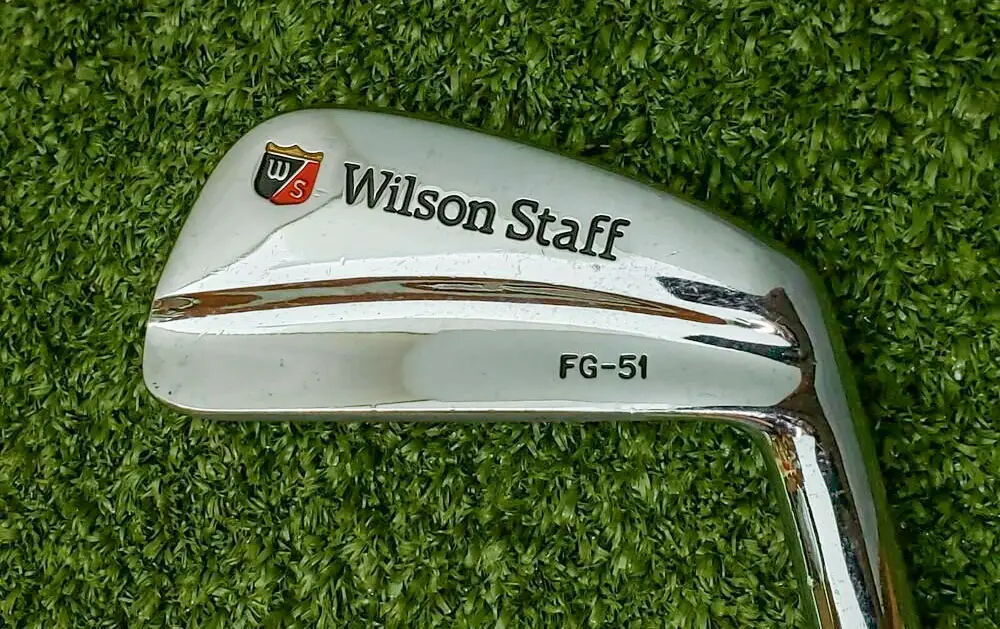
| 1990 | Staff FG-51 | Forged Staff iron from the transition period between Wilson’s classic blade era and the oversized, technology-driven irons that followed later in the decade. | |
| 1988 | Staff Goose Neck | Blade-style iron named for its gooseneck hosel offset, a shaping detail tied to a more traditional, workability-first look at address. | |
| 1985 | Staff Tour Blades | Forged muscleback blade built purely around feel and feedback, still regarded as one of the best-looking forged blades Wilson ever released. | |
| 1984 | Wilson Hale Irwin | Signature blade built with Hale Irwin’s input, featuring hand-ground soles that paired tour-level quality with a more accessible price than a full custom set. | |
| 1978 | Wilson 1200 LT | Lightweight variant of the 1200 series built during Wilson’s push into multi-material iron construction through the 1970s. | |
| 1973 | Wilson 1200 | Multi-metal iron that pioneered mixed-material construction within Wilson’s Dynapower lineage as the brand moved past single-material forged blades. | |
| 1971 | X-31 | Mass-market muscleback with a small, smooth-lined head aimed at department and sporting goods store buyers rather than pro shop customers. | |
| 1969 | Dynapower Staff | Continuation of the Dynapower name built on the original’s bore-through hosel weighting, the same construction that carried Arnold Palmer and Sam Snead to major wins a decade earlier. | |
| 1966 | Sam Snead Blue Ridge | Signature iron tied to Sam Snead’s long advisory role at Wilson, part of the company’s strategy of building clubs around its touring professionals’ names and feedback. | |
| 1960 | K-28 Harmonized | Cavity-back design from 1960 built specifically to add forgiveness at a time when most competing irons were still solid-back blades. | |
| Patty Berg Cup Defender | Signature iron tied to Patty Berg, who joined Wilson’s advisory staff in the 1940s and helped shape the company’s clubmaking direction for decades. | ||
| Arnold Palmer Shot Maker | Signature release built around Arnold Palmer’s game, known among period players for pairing distance with an unusually forgiving feel for the era. | ||
| 1959 | Dynapower Staff Model | Staff-level version of the Dynapower name and its bore-through hosel design, the same clubs Palmer and Snead would carry to major championship wins the following year. | |
| 1953 | Sam Snead Championship | Early Sam Snead signature iron from Wilson, part of the company’s foundational strategy of pairing product development with feedback from its touring staff. | |
| 1933 | Wilson Ogg-mented | Widely credited as the first perimeter-weighted iron, designed by Wilson advisor Willie Ogg to shift mass away from the heel toward the center of the face decades before perimeter weighting became standard. | |
| 1932 | Wilson Walker Cup | Precision-forged blade from Wilson’s early manufacturing push, part of the company’s shift toward higher-quality materials in its second full decade making irons. | |
| 1930 | Wilson Pinehurst | Wilson’s first iron release, precisely forged carbon steel heads styled after classic Scottish blade shaping that marked the company’s entry into the iron market. |
Wilson’s Latest Iron Technology, Year by Year
2026: Three Staff Models Plus an AI-Mapped Dynapwr
Wilson’s 2026 release expanded the Staff Model line into three distinct builds instead of two. The Staff Model CB, XB and Blade all share forged 8620 steel construction, a milled face and heritage styling like hosel knurling and longer ferrules, but they split by forgiveness level, from the fully workable Blade to the new hollow-body XB built for extra ball speed. The DYNAPWR Forged also dropped its power-hole face design in favor of an AI-optimized face thickness and a perimeter-wrapping cup face, aiming for steadier ball speed on mishits while keeping its forged, cavity-back feel.
2023: The Dynapower Name Returns with AI Face Mapping
Wilson revived the Dynapower name in 2023 after years off the roster, rebuilding it around Power Holes 3.0 and an AI-driven face-mapping process. Instead of chasing one central sweet spot, the design was built around where mid-to-high handicap golfers actually make contact, biasing ball speed retention from the center of the face out toward the toe. Men’s and women’s versions launched together, sharing the same face technology with shaft weight and loft tuned to each swing speed.
2022: An Asymmetrical D9 Face and a Turf-Focused Launch Pad 2
The 2022 lineup introduced the Staff D9 family and a second-generation Launch Pad. The D9 broke from earlier symmetrical face-flexing designs with an asymmetrical, heel-biased Power Hole layout, generated by testing thousands of head variations through computer simulation before landing on a final geometry, and it launched in standard, forged and women’s versions. The Launch Pad 2 took a different approach, reshaping the sole to reduce turf drag and produce shallower divots while shifting mass from the back of the head into the sole to lower the center of gravity for easier, more consistent launch.
More Wilson Irons History
Wilson had made some real technological advancements in their game improvement irons, and has held true to their pure players options as well. 2022 saw game improvement options with the D9 and D9 Forged, and a super game improvement with an upgraded Launch Pad set.
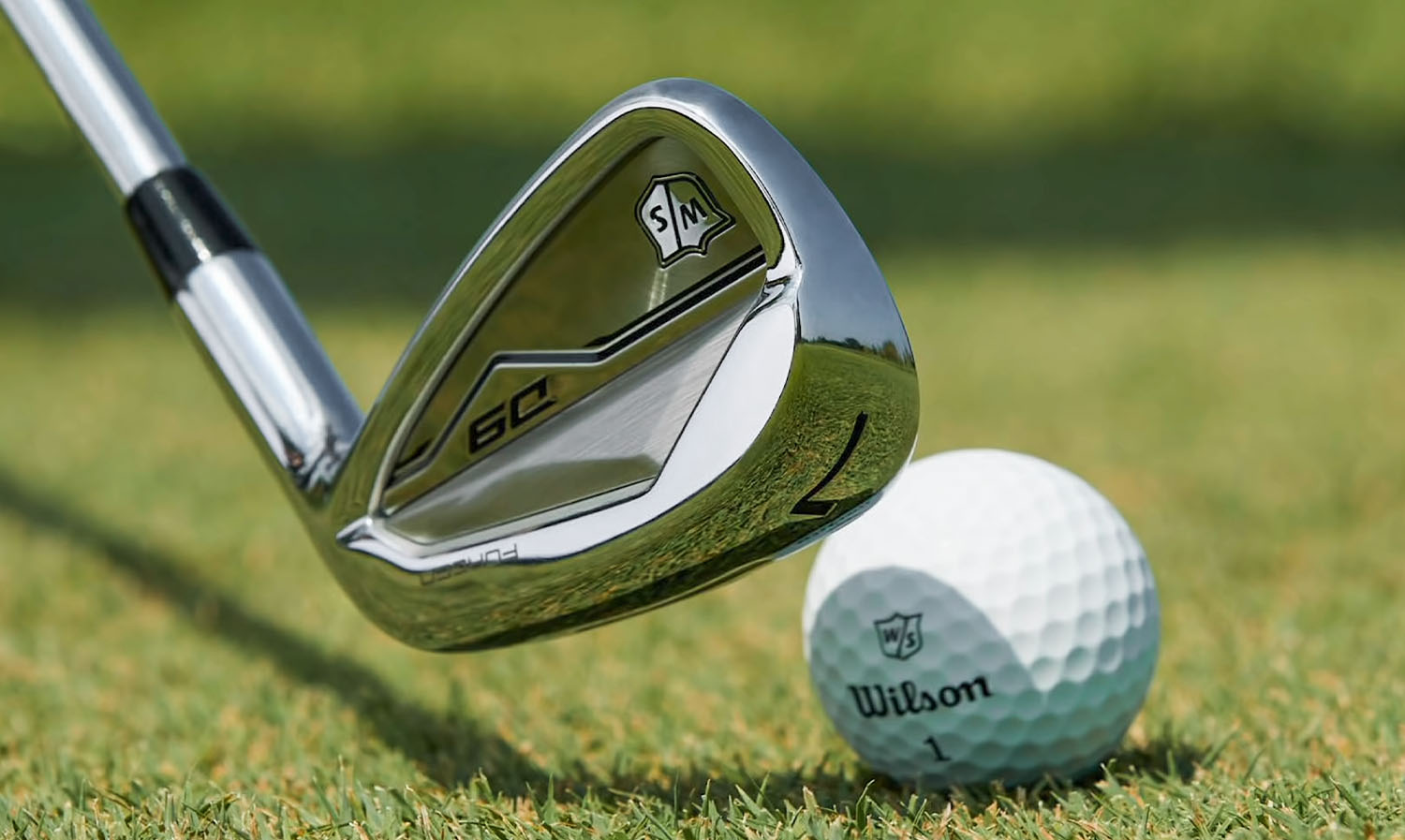
In 2021 Wilson released new and improved players options with the Staff Model Blades and Cavity Back. Both of which carry improvements for the modern age, and offer tour preferred feel, look, and shot shape. Staff Model Blades are the preferred irons for top tour professional Gary Woodland.
2018 to 2020 showed progressive releases of irons for all types of golfers. The original and revolutionary “super game improvement” Launch Pad irons were released in 2020, with much praise for the target market. Easy to swing, and even easier to make solid contact.
The Staff FG Tour V6, released in 2018, was a highly polished chrome set with a players iron look packed with technology. Tungsten, used for forgiveness and distance, makes it the perfect “players distance” iron.
Are Wilson and Wilson Staff the same thing?
Wilson (Golf) and Wilson Staff operate under the same umbrella of Wilson Sporting Goods; however, they are vastly different in many ways. Wilson Golf/Ultra are beginner box sets that are easy to hit, low cost, and come with everything you need. Which includes everything down to the bag and even headcovers.
Get Smarter About Your Swing
Join thousands of golfers getting exclusive swing tips, club reviews, and gear guides straight to their inbox – before they hit the site.
Theses sets are actually some of the best women’s starter golf clubs. And they even have complete sets of women’s golf clubs as well.
Wilson Staff is Wilson’s “tour preferred” brand. Customizable irons and woods, premium price point, and performance to back it up. It offers some of the best irons on the market, but is still trying to shake the “Wilson makes cheap box sets” stigma.
Wilson Irons History
Wilson irons have the most storied history in golf. They’ve contributed to more major victories (62) than any other equipment manufacturer. This gives them a very solid argument about being the best of all time. In fact, for the last 100 years, Wilson has won a major in each decade, proving their longevity.
They started making clubs in 1914, but Gene Sarazen really thrust them into the spotlight in the 1930s. Gene remained a Wilson staff member for over 75 years, which is the longest running sports contract in history. Using the Ogg-mented irons, Gene won seven major championships.
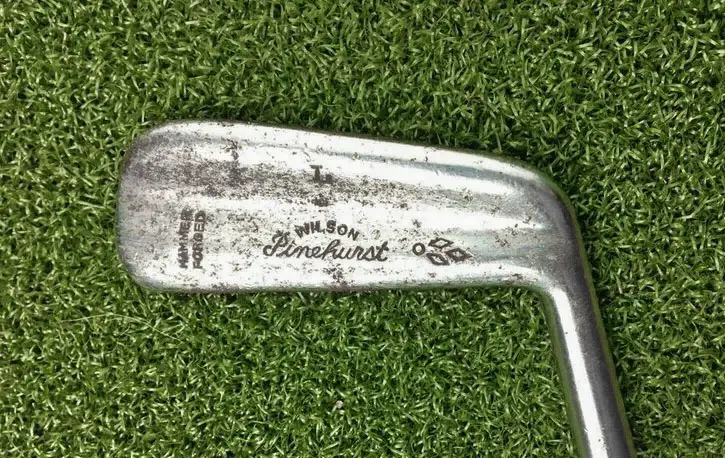
(1930 Wilson Pinehurst Iron)
Throughout 1940-1980, Wilson irons were in the bag, and often named after, some of the best to ever play the game. Sam Snead, Arnold Palmer, Patty Berg, Walter Hagen, and Ben Crenshaw helped turn Wilson irons into an icon, and the “Cadillac of golf clubs.”
How Often Does Wilson Release New Irons
Wilson has released irons sporadically over the years; however, these launches typically occurred only when significant improvements were made. Sadly, after suffering a major drop in market share, and being branded as “clubs your grandfather used,” Wilson rebranded in 2006 to get back to their premium roots.
Watch
New videos every week on our youtube channel
Since 2009, Wilson has released at least one new set of irons each year and sometimes introducing multiple sets. Additionally, with new investments in research and development following their 2006 rebranding, Wilson Staff has made consistent improvements to their irons, ultimately creating some of the purest options available on the market today.
Frequently Asked Questions (FAQ)
Yes. Wilson’s current Staff Model, D9, and Dynapwr lines routinely test well against irons costing hundreds more, with strong forgiveness on mishits and solid distance numbers for their price point. The brand’s tour-level forging heritage from decades of Staff blades still shows up in how a well-struck modern Wilson iron feels off the face.
Wilson Staff is the performance tier, forged players irons and cavity backs built for golfers who want to shape shots and control trajectory. Wilson Golf, sold under names like Ultra and Profile, covers complete box sets aimed at beginners, prioritizing forgiveness, low cost, and an everything-included package over workability.
Both, depending on the line. Staff Model, D9 Forged, and Dynapwr Forged irons use forged 8620 carbon steel for softer feel and shot-shaping control, while distance-focused sets like the standard Dynapwr, Launch Pad, and Ultra are cast, which keeps costs down and allows more aggressive weighting for forgiveness.
It depends on the specific line rather than the brand as a whole. The Staff Model Blade suits low single-digit handicaps who want full workability, the D9 and Dynapwr Forged fit golfers roughly in the 6 to 15 handicap range, and the Launch Pad and Ultra lines are built as super-game-improvement irons for higher handicaps and beginners.
Wilson Sporting Goods is headquartered in Chicago, where the company was founded in 1914, and design work on new iron technology is still centered there. Like most major club makers, actual production has moved overseas, with China serving as Wilson’s primary manufacturing hub alongside smaller facilities in Vietnam and Mexico.
Check the club for a serial number stamped on or near the face, then match the model name printed on the hosel or back of the iron against a release timeline like the one on this page. Wilson historically ran longer release cycles than rivals, often 24 to 36 months between major redesigns, so matching the model name is usually the fastest way to narrow down the year.
Wilson generally competes on value, delivering forged feel and tour-inspired shaping at a lower price than the big three. Callaway and TaylorMade lean harder into R&D-driven distance technology across every handicap tier, while Titleist focuses on precision and traditional blade and cavity shapes for intermediate to advanced players; Wilson’s niche is offering a comparable playing experience for less money.
Wilson has kept a small but active PGA Tour advisory staff in recent years but without many super notable names. That tour presence continues a long tradition for the brand, which built its early reputation on clubs designed with more notable names such as Sam Snead, Arnold Palmer, Patty Berg, and Hale Irwin.
Other Brands Irons By Year

Leave a Comment