This post may include affiliate links. We do earn a commission for products purchased using these links (at no additional cost to you). Thank you for supporting Swing Yard, making the content you see on this blog possible. For more information, please see our privacy policy for details.
*Read our review guidelines.
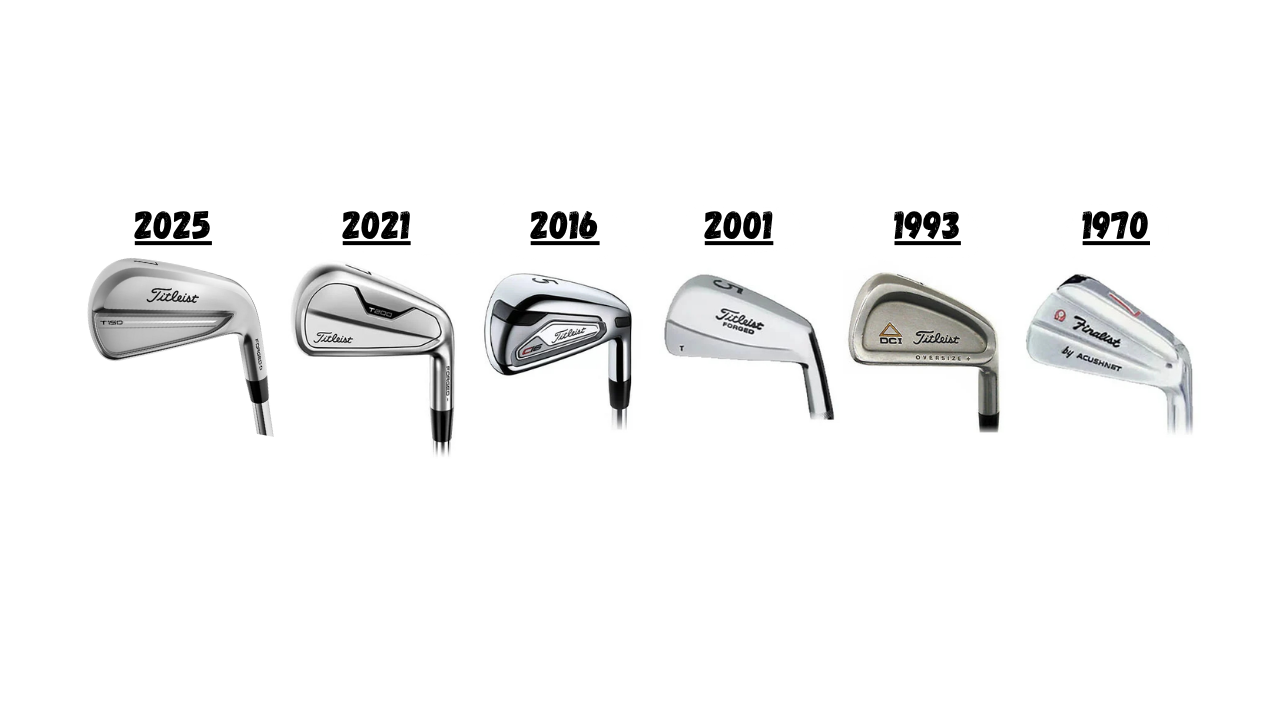
Titleist Irons by Year Table:
| Year Released | Titleist Iron Model | Key Innovation / What Changed | Price / Where to Buy |
|---|---|---|---|
| 2025 | T100 | Refined tour blade with updated progressive shaping, tighter lofts, and enhanced feel from a new forged carbon steel construction. Titleist’s benchmark players iron. | |
| T150 | Muscle-back forged iron with a slightly thicker topline than T100 for added confidence, delivering tour-caliber precision with modest forgiveness for better players. | ||
| T250 | Max-speed hollow body construction with a co-forged face insert. Delivers significantly more distance and forgiveness than the T150 while retaining a compact, players-style look. | ||
| T350 | Maximum game-improvement iron with a wide sole, high launch, and deep undercut cavity. Most forgiving iron in the 2025 T-Series lineup, built for mid-to-high handicap players. | ||
| 2023 | T100 | New forged carbon steel body with Tour Chrome finish. Thinner topline and tighter blade length versus 2021 model; updated tungsten weighting for improved ball flight consistency. | |
| T150 | Introduced as the new T100S replacement. Muscle-back construction with a refined cavity for players seeking more feedback and workability than the T100. | ||
| T200 | Max Impact technology with a thinner, faster face and expanded tungsten weighting. Offers more distance than T100 while preserving a compact, players-friendly profile. | ||
| T350 | Redesigned high-launch cavity back with a deeper undercut and wider sole than the T300. More accessible ball flight for players with moderate swing speeds. | ||
| T350 Women’s | Women’s-specific version of the T350 with lighter total weight, softer flex shafts, and grip sizing optimized for female golfers seeking maximum launch and forgiveness. | ||
| U505 | Hollow-body utility iron with a co-forged face for long iron and hybrid replacement. Updated tungsten weighting lowers CG for higher launch compared to the 2021 U505. | ||
| 2021 | T100 | Replaced the AP2 lineage. New progressive blade length and offset for more consistency across the set. Thinner topline in short irons for a cleaner look at address. | |
| T100S | Strong-lofted version of the T100 for players who want tour-iron feel with added distance. Each iron is one loft stronger than the standard T100 without changing the look. | ||
| T200 | Second-generation T200 with a new Max Impact construction. Stainless steel body with a faster forged face insert, adding ball speed over the 2019 model. | ||
| T300 | Updated game-improvement iron with a redesigned hollow body and repositioned tungsten weights. Higher launch and more forgiveness than the 2019 T300. | ||
| U505 | First-generation U505 hollow utility iron. Co-forged maraging steel face with tungsten weighting. Designed as a direct long-iron and hybrid replacement with iron-like playability. | ||
| 2020 | T400 | Maximum distance iron with a hollow body and ultra-thin face. The most forgiving and highest-launching iron Titleist offered at the time; targeted at senior and high-handicap players. | |
| CNCPT CP-03 | Ultra-premium hollow forged iron from Titleist’s CNCPT sub-brand. CNC-milled from a single billet of carbon steel with a hollow construction for elite distance and feel. | ||
| CNCPT CP-04 | CNCPT hollow cavity iron offering slightly more forgiveness than the CP-03. Same premium CNC-milled construction, shaped for players who want maximum performance with a touch more help. | ||
| 2019 | 620 MB | Pure muscle-back blade forged from 1025 carbon steel. Zero cavity, zero forgiveness by design. Titleist’s ultimate feedback iron for scratch players and tour professionals. | |
| 620 CB | Cavity-back forged iron with a traditional shape for players who want blade-like looks and feel with modest perimeter weighting. Often combo-set with the 620 MB. | ||
| T100 | Launched the modern T-Series. First T100 replaced the AP2, featuring tungsten weighting in long irons and a forged carbon steel body. Defined Titleist’s iron lineup going forward. | ||
| T100S | Strong-lofted sibling to the original T100. Introduced simultaneously, giving players a distance option without sacrificing the tour-blade look and forged feel. | ||
| T200 | First T200 with a patented Max Impact face technology. Thin stainless face insert bonded to a forged body dramatically boosted ball speed across the face compared to the AP1. | ||
| T300 | First T300, replacing the AP1. Hollow-body construction with a co-forged face for maximum ball speed and high launch. Aimed at mid-handicap players wanting distance and forgiveness. | ||
| CNCPT CP-01 | Titleist’s inaugural CNCPT iron. Blade-style, CNC-milled from premium carbon steel billet. Ultra-limited release establishing the CNCPT sub-brand for the most discerning players. | ||
| CNCPT CP-02 | Second CNCPT offering with a slight cavity for players wanting blade performance with marginally more forgiveness. CNC-milled forged construction with premium fitting. | ||
| 2017 | 718 AP1 | Largest profile in the AP series with a hollow-blade construction and co-forged face. Added tungsten weighting moved CG lower and deeper for easier launch than the 716 AP1. | |
| 718 AP2 | Co-forged tungsten toe weights added to the AP2 for the first time. Improved low/back CG over the 716 AP2 produced a higher, more consistent ball flight for better players. | ||
| 718 AP3 | Brand-new model bridging the AP1 and AP2. Thin hollow-blade construction with tungsten weighting for players wanting AP2 looks with AP1-level launch and forgiveness. | ||
| 718 MB | Refined muscle-back blade forged from 1025 carbon steel. Updated grind and leading-edge refinements over the 716 MB. Titleist’s purest, most traditional iron for scratch players. | ||
| 718 T-MB | Tour muscle-back with a hollow-body construction for added speed. A hybrid between the MB and AP series, offering feel with more ball speed for stronger players. | ||
| 718 CB | Forged cavity-back with a compact head shape for players wanting more forgiveness than the MB with a similar aesthetic. Updated sole geometry versus the 716 CB. | ||
| 2016 | C16 | Limited-production players iron combining a forged carbon steel body with co-forged tungsten weights. A preview of the tungsten-weighting technology later used in the 718 AP series. | |
| 2015 | 716 AP1 | Wider sole and deeper undercut than the 714 AP1. Improved face flexing for more ball speed. First AP1 with a hollow cavity construction for enhanced launch and playability. | |
| 716 AP2 Forged | New tungsten sole insert repositioned CG lower than previous AP2 generations. Improved face milling and tighter loft/lie tolerances over the 714 AP2. | ||
| 716 MB Forged | Updated sole grind and face profile over the 714 MB. Refined for improved turf interaction and a slightly more modern aesthetic while preserving classic blade feedback. | ||
| 716 T-MB | Hollow-body tour muscle-back offering ball speed in a compact, blade-like package. Updated CG positioning versus the 714 T-MB for a more penetrating ball flight. | ||
| 716 CB Forged | Forged 1025 carbon steel cavity-back with refined sole width and updated tungsten weight placement for improved CG over the 714 CB. | ||
| 2013 | 714 AP1 | First AP1 with a co-forged face insert for faster ball speed. Wider sole and higher-launching design than the 712 AP1. More accessible to mid-handicap players. | |
| 714 AP2 Forged | Added a tungsten-steel weight in the toe for enhanced CG control. Tighter tolerances and updated progressive offset made the 714 AP2 the most precise AP2 to date. | ||
| 714 MB Forged | Slightly updated blade geometry with a refined leading edge. Maintained the classic muscle-back design that tour players demanded while tightening manufacturing tolerances. | ||
| 714 CB Forged | Updated forged cavity-back with repositioned sole weight. Improved shot dispersion over the 712 CB while retaining the compact, workable profile better players prefer. | ||
| 2011 | 712 AP1 | Redesigned with a wider sole and deeper cavity for more stability on off-center hits. Updated CG placement increased forgiveness while keeping the AP1 accessible for mid-handicappers. | |
| 712 AP2 | Updated forged construction with a reconfigured sole and badge weighting. Improved sound and feel over the 710 AP2, maintaining the AP2’s tour-preferred profile. | ||
| 712 MB | Refined sole and updated leading edge on the muscle-back blade. Used extensively on tour with minimal changes from the 710 MB by design, prioritizing consistency for existing users. | ||
| 712 CB | Compact forged cavity with updated badge weight placement. Targeted at better players wanting more forgiveness than the MB with a nearly identical look at address. | ||
| 2009 | 710 AP1 | First AP-series iron. Launched the AP (Advanced Performance) line, replacing the DCI 990. Wide sole, perimeter weighting, and a more modern game-improvement design language. | |
| 710 AP2 | The original AP2, replacing the forged 680/690 line. Forged carbon steel cavity-back with a tour-player profile. Introduced the AP2 as Titleist’s definitive better-player iron. | ||
| 710 MB | Streamlined muscle-back blade replacing the 695 MB. Cleaner topline geometry and updated sole design while maintaining the pure, minimal aesthetic expected by tour-level players. | ||
| 710 CB | Compact forged cavity-back replacing the 695 CB. New badge weighting and improved CG positioning for better players wanting perimeter weighting with minimal visual bulk. | ||
| 2008 | Z Blend Forged | Combo set concept blending forged blade short irons with cavity-back long irons. Offered tour players the option to mix feel in the scoring irons with forgiveness in the longer clubs. | |
| AP2 | Pre-series AP2 prototype/early release. Established the AP2 identity of a forged, compact cavity-back with tour-preferred aesthetics ahead of the full 710 AP series launch in 2009. | ||
| 2007 | AP1 | Original AP1 preceding the 710 series. Broader sole and deep undercut cavity aimed at high-handicap players. Established the AP1 identity as Titleist’s most forgiving iron of the era. | |
| 2006 | Forged 775 | Transition-era forged iron bridging the classic numbered series and the AP era. Mid-sized head with a shallow cavity for better players wanting more forgiveness than the 695 MB. | |
| Forged 775.CB | Cavity-back version of the 775 with a deeper undercut for more perimeter weighting. Paired well with 775 blades in combo sets for players wanting a consistent look across the set. | ||
| Forged 695MB | Classic muscle-back blade used widely on tour. Refined version of the 681 blade with updated sole geometry. One of the most acclaimed Titleist blades of the mid-2000s. | ||
| Forged 695CB | Cavity-back complement to the 695 MB with the same forged carbon steel body. Popular combo option with the MB, offering the same aesthetic with added forgiveness in long irons. | ||
| Forged 660 | Ultra-thin-sole blade designed for elite players wanting maximum turf interaction control. Minimal offset and a very tight topline; one of Titleist’s most demanding irons to hit well. | ||
| 2005 | Forged 735.CM | Cast muscle-back (CM) iron offering a forged-like feel through precision casting. Bridged the gap between Titleist’s forged line and the DCI cast irons for mid-level better players. | |
| 2004 | Forged 804.OS | Oversize forged iron aimed at better players wanting more forgiveness without moving to the DCI line. Larger head profile with a wider sole and deeper cavity than the CB offerings. | |
| Forged 704.CB | Compact forged cavity-back with refined weighting over the 690 CB. Tour-preferred shape with updated sole grind for improved playability from tight lies. | ||
| 2003 | Forged 670 | Pure forged blade with a minimal profile, zero cavity, and a traditional rounded back. One of the last of Titleist’s ultra-classic numbered blade designs before the modern forged era. | |
| Forged 680 | Tour-used forged iron with a slightly wider sole than the 670 for more versatility. Refined face geometry improved consistency without departing from the classic blade aesthetic. | ||
| Forged 690.MB | Updated muscle-back replacing the 681 Forged. Cleaner lines and updated sole geometry while preserving the precise, minimal feel preferred by scratch and tour players. | ||
| Forged 690.CB | Cavity-back complement to the 690 MB. Identical aesthetic profile with added perimeter weighting in the cavity. Widely used as a combo set pairing with the 690 MB. | ||
| 2002 | 731PM Limited Edition | Limited-production players model. Precision-milled (PM) from forged carbon steel with exceptional CNC face milling tolerances. Extremely rare; produced in very small quantities for collectors and tour players. | |
| DCI 762B | Blade version of the DCI 762 with a thinner topline and reduced offset. Targeted at better players within the DCI game-improvement line who wanted a more workable, tour-shaped option. | ||
| 2001 | DCI 822OS | Oversize cavity-back at the forgiving end of the DCI line. Wide sole, high offset, and deep undercut for maximum forgiveness and high launch aimed at high-handicap players. | |
| DCI 762 | Mid-sized DCI iron positioned between the oversize 822OS and the blade-style 762B. Stainless cast construction with perimeter weighting for mid-handicap golfers. | ||
| 681 Forged Blade | Forged carbon steel blade with a classic tour profile. Predecessor to the 690 MB with a slightly rounder back and more traditional shaping; favored by better players and tour caddies. | ||
| 681 “T” Forged | Tour-only version of the 681 Forged Blade with tighter manufacturing tolerances and a slightly modified sole grind. Custom-built primarily for Titleist tour staff. | ||
| 2000 | DCI 990B | Blade version of the DCI 990 for better players. Thin topline, minimal offset, and reduced sole width within the DCI stainless family. Bridged the DCI cast and forged blade worlds. | |
| 1999 | DCI 990 | Mid-to-late DCI era iron with refined perimeter weighting and improved feel over earlier DCI models. One of Titleist’s best-selling irons of the late 1990s across handicap levels. | |
| 1998 | DCI 981 | Standard DCI 981 with a mid-sized head and traditional offset. Updated stainless steel construction over the 962, offering improved consistency for a broad range of players. | |
| DCI 981SL | Senior/Light version of the DCI 981. Lighter total weight and softer flex options. One of Titleist’s first irons specifically engineered for players with slower swing speeds. | ||
| 1997 | DCI 962 | Core DCI model updated with improved casting quality. Mid-sized stainless cavity-back delivering reliable perimeter weighting for mid-handicap golfers in the late 1990s. | |
| DCI 962B | Blade-style version of the DCI 962 with reduced offset and a thinner topline. Offered better players the DCI stainless platform in a more aesthetically traditional package. | ||
| 1996 | DCI Oversize + Black | Black-finish oversize DCI iron with a larger head profile and deeper undercut. Second generation of the DCI Oversize platform with improved CG depth over the original 1993 DCI Black. | |
| DCI Oversize + Gold | Gold-finish version of the DCI Oversize Plus. Identical technology to the Black finish model; gold colorway was a popular aesthetic choice through the mid-1990s golf market. | ||
| 1993 | DCI Black | Original DCI oversize iron from Titleist. Introduced cast stainless perimeter weighting to Titleist’s lineup in an oversized format. A major departure from the brand’s forged blade heritage. | |
| DCI Gold | Gold-finished counterpart to the original DCI Black. Same cast stainless perimeter-weighted construction with a premium gold cosmetic finish, positioned slightly above the Black in the lineup. | ||
| 1991 | Titleist Tour Model | Classic forged tour iron used by Titleist staff players in the early 1990s. Minimal muscle-back design with very little cavity. Represented the pinnacle of traditional Titleist iron craftsmanship before the DCI era. | |
| 1987 | DTR Irons Titleist Tour Model Box Blades | DTR (Dynamic Torque Response) irons introduced a variable-thickness face concept for the era. Box Blades were traditional square-back blades used by tour players demanding minimal visual distractions. | |
| 1986 | B-33 Irons | Investment-cast stainless iron offering improved consistency over forged options of the era. The B-33 was positioned as an accessible, durable option below Titleist’s premium forged Tour Models. | |
| 1985 | Tour Model Titleist Tour Model 841 | Forged blade tour iron produced during one of Titleist’s most prolific eras for tour play. The 841 featured updated sole geometry for improved versatility on different course conditions. | |
| 1983 | Titleist Tour Model 821 | Early 1980s forged tour blade with a progressive offset structure. Part of the numbered Tour Model series that established Titleist’s reputation as the preferred iron brand on the PGA Tour. | |
| 1982 | Titleist 1982 Tour Model Accu-Flo Plus #10 Irons | The Accu-Flo Plus refined the original Accu-Flo with improved sole camber. The #10 Irons were a game-improvement option for the era with a more traditional look than cast competitors. | |
| 1981 | Accu-Flo Titleist 1981 Tour Model | Accu-Flo introduced a variable-weight distribution concept for more consistent distance gapping. One of Titleist’s earliest attempts at engineered weight placement in an iron head. | |
| 1979 | Titleist 1979 Tour Model | Forged blade iron used on tour during a period of Titleist dominance in professional golf. Defined by clean lines, tight tolerances, and the forged 1025 carbon steel construction Titleist became known for. | |
| 1978 | Lite 100 | Lightweight iron design targeting players who struggled with heavier steel-shafted sets. One of Titleist’s earlier efforts to address swing speed and accessibility for a broader player base. | |
| 1976 | Model 90 Model 100 Pro 100 | Three-tier iron lineup offering a range of player profiles. The Pro 100 was the tour-facing option; the Model 90 and 100 offered progressively more forgiveness for recreational golfers of the era. | |
| 1972 | Acushnet AC 108 | Produced under the Acushnet brand (Titleist’s parent company). Cast stainless construction with perimeter weighting, ahead of its time in 1972. Laid the technological foundation for future Titleist iron development. | |
| 1970 | Finalist Forged | One of the earliest Titleist-branded forged irons. Classic blade construction with a handcrafted feel reflecting the standard of the era. Among the first irons to carry the Titleist name as a premium golf equipment brand. |
Titleist Irons Over the Last 5 Years
Titleist has become synonymous with the game of golf. Attention to detail, consistency, and high performance has been delivered year after year. Over the last five years, Titleist has introduced the revolutionary T series, and new versions of the 700 series.
Now named the 718 irons, the 718 comes in a variety of options for all types of golfers. MB, T-MB, and CB for scratch and tour players, down to the AP1, 2, and 3 lines for mid to high handicap players.
Released in 2019, the 620CB and the classic Tour blade 620MB were met with great praise in style and performance. The 620MB goes back to the Titleist roots in styling, and offers that classic minimalist look a Tour pro desires.
Also released in 2019 is the popular T series. The T series comes in models T100, T100S, T200, and T300. Although performance was outstanding, the series was renewed in 2021 and received much praise for the upgrades.
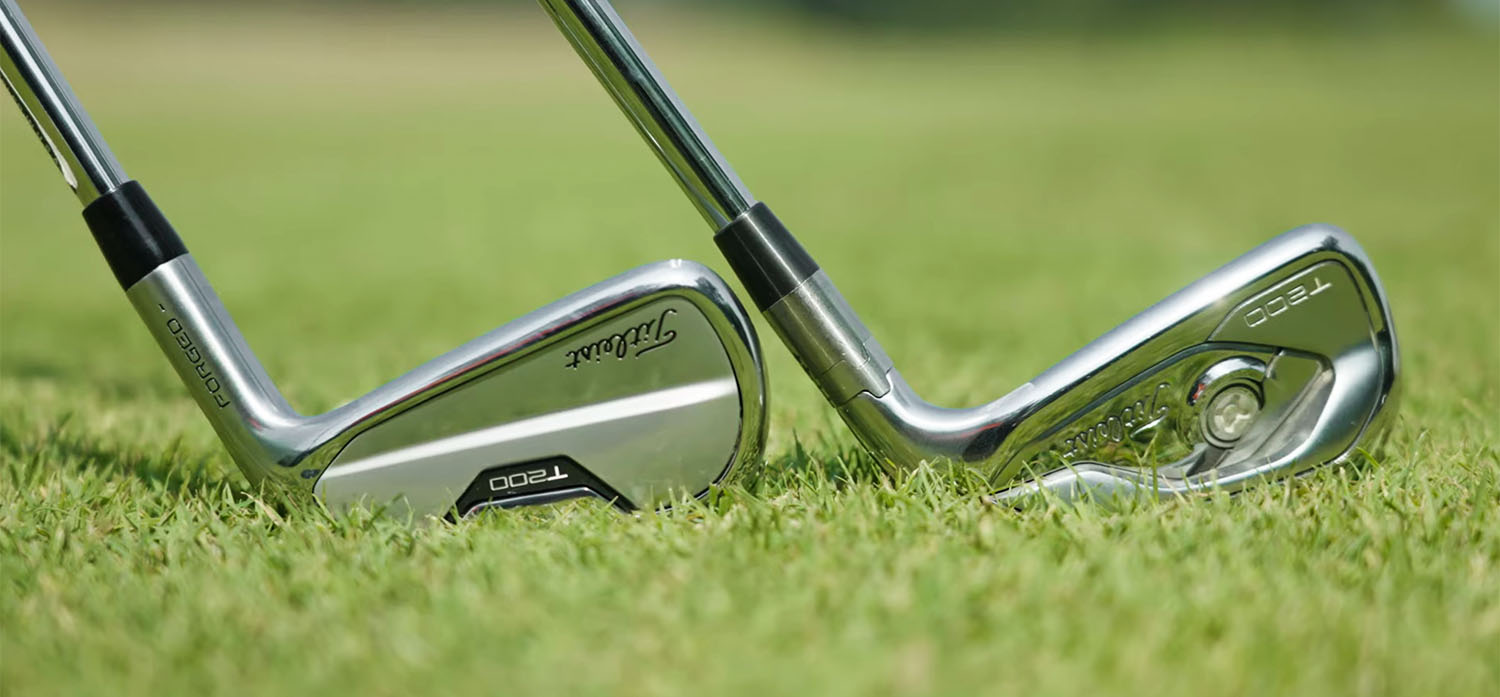
The 2021 T series received a remodeling, but retained the most loved parts of the 2019 line. The 2021 series features a satin chrome finish as opposed to the polished look of the 2019 model. They were also redesigned into a more classic Titleist minimal look, which many players prefer.
Get Smarter About Your Swing
Join thousands of golfers getting exclusive swing tips, club reviews, and gear guides straight to their inbox – before they hit the site.
Old Titleist Irons Through the Years
Upon the purchase of Golfcraft (arguably the largest club manufacturer in the world at the time) in 1969, Titleist, aka Acushnet, released their very first iron set dubbed Finalist Forged. Three years later the AC 108 was released and was one of the first irons to feature tungsten perimeter weights for playability.
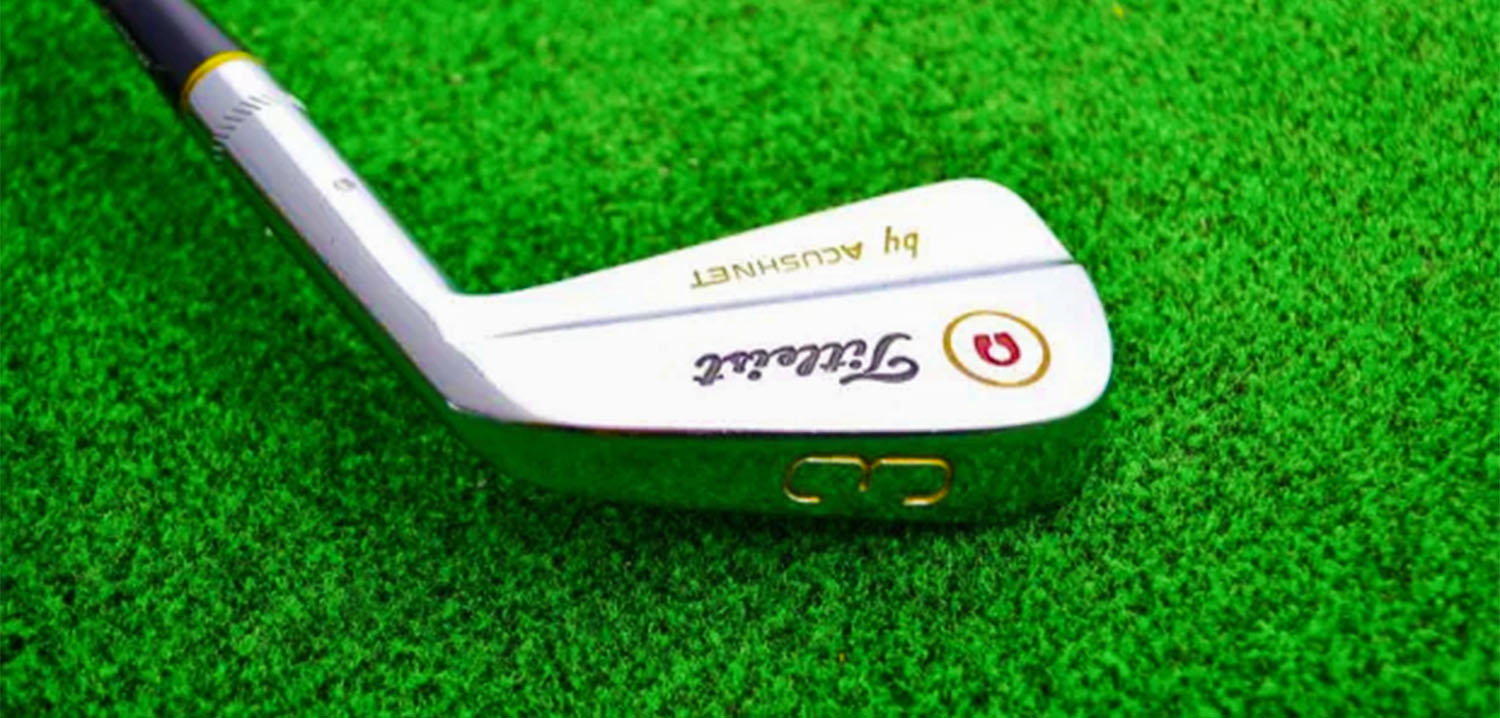
The late 70s brought us the Titleist Tour Model, which is the classic muscle back forged irons that Titleist has built ever since. Thin topline, minimal offset, simple “Titleist” logo on the back, and workability many pros love.
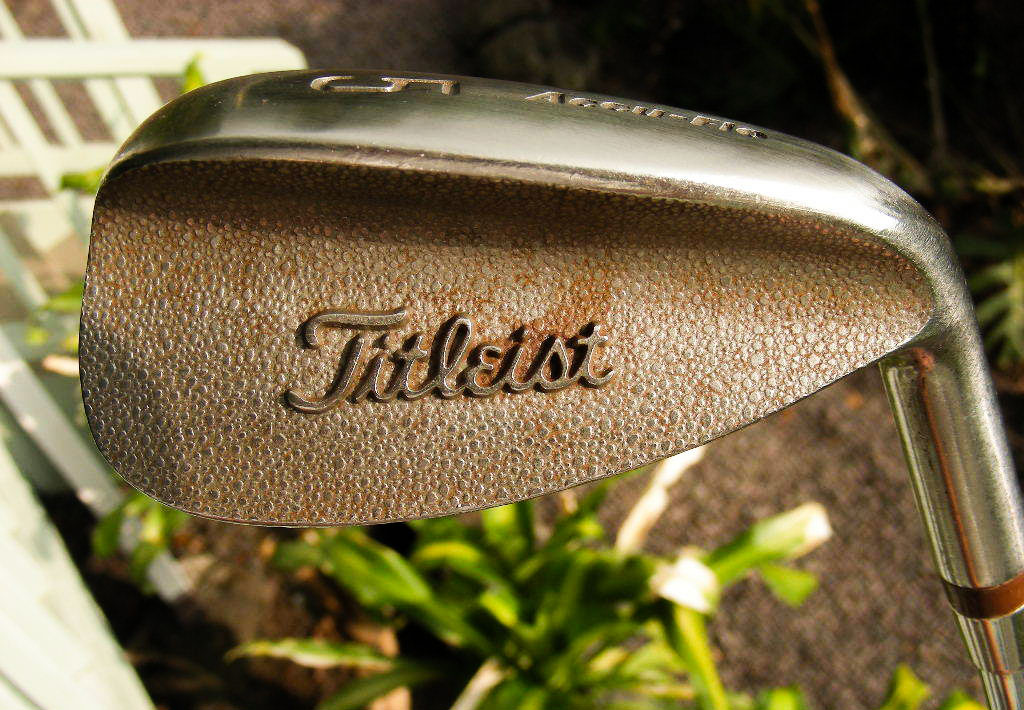
The Tour Model is now a numbered model, most recently the 620MB, but features a similar design from the late 70s. Many top pros have had major victories with this line. Tiger Woods completed the “Tiger Slam” with Tour Model blades.
How Often Does Titleist Release New Irons
Titleist is all about improving their offerings, and being the best golf manufacturer on the market. To keep up with the demand of “more and better”, Titleist has released some type of new iron pretty much every year since the mid 90s.
Watch
New videos every week on our youtube channel
It is safe to say that you can find a new, improved, and impressive set of irons, for all golfer types, from Titleist every two years. With their history and impeccable consistency, it is a guarantee Titleist will be at the top of club making greatness for a LONG time!
Frequently Asked Questions
The 2025 T-Series lineup is headlined by all-new T250 and T250 Launch Spec models alongside upgraded versions of the T100, T150 and T350. These are the current models on shelves as of 2026 and represent the most complete T-Series lineup Titleist has ever brought to market.
Think of them as a ladder from tour precision to maximum forgiveness. The T100 is the Tour iron, forged and compact with maximum control suited for handicaps of 0 (or better) to 5. The T150 adds a touch more size and speed for competitive players who want T100 feel with slightly more help, suited for handicaps of roughly 2 to 8. The T250 is the players distance iron with hollow body construction and stronger lofts suited for handicaps of roughly 5 to 18. The T350 offers maximum forgiveness with a wider sole and bigger head for handicaps of 12 and above.
The T100 replaced the AP2, the T200 came in for the AP3, and the T300 replaced the AP1. The T-Series launched in 2019 and it contained more than just a name change. Titleist described it as going in a completely different direction, calling it the company’s first new iron franchise in nearly 12 years.
Every handicap! Titleist’s target audience isn’t better golfers, it’s dedicated golfers of all ability levels. The T-Series covers everyone from tour-level players in the T100 to 20-something handicappers looking for maximum forgiveness in the T350.
Titleist. Titleist are the most commonly used iron manufacturer on the PGA Tour in 2026, with players including Jordan Spieth, Justin Thomas and Max Homa (among others) all gaming T-Series irons.
The T100 is the purist’s choice because they are compact, tour-shaped and all about feel and control. The T150 features a muscle channel from the 3-iron to the 7-iron for added ball speed and stronger lofts, giving players slightly more distance and launch while maintaining the clean look of a players iron. If you want T100 looks with a little extra performance built in, the T150 is the one.
The T250 is the direct successor to the T200. The T250 has been completely redesigned with a slightly larger profile and a new all-steel construction replacing the plastic badging of the previous generation, making it visually cleaner and far easier to blend with other T-Series models. Performance is better across the board, especially ball speed consistency.
The T350 is a strong option for beginners who want a premium iron without sacrificing forgiveness. That said, beginners are generally better served getting fit properly before committing to any iron family. The T350 Launch Spec model is worth knowing about too, as it adds extra loft to help players who struggle to get the ball airborne consistently.
Yes, and Titleist actually encourages it. More modern era players are switching from full sets of the same iron to blended sets of two or three different models, and the new all-steel construction across the full T-Series makes transitioning visually seamless between each model. A popular combination is T150 in the short irons and T250 in the long irons for better players who want control on scoring shots but easier launch in the bag.
Titleist runs roughly on a two year cycle. The T-Series launched in 2019, was refreshed in 2021, updated again in 2023, and the current generation arrived in 2025. You can reliably expect a meaningful update every two years, with each generation bringing genuine performance improvements rather than just updated looks.
The AP series. AP stood for Advanced Performance and ran from 2007 through 2018 across multiple generations. Before that, Titleist used numbered forged models like the 690 MB, 695 CB and 710, 712, 714 series. And before those, the DCI series served as the game improvement line throughout the 1990s alongside the classic Tour Model blades that go all the way back to the late 1970s.
Absolutely. The 718 AP2 and 716 AP2 in particular remain highly regarded players irons that hold up well against modern options. The 620 MB and 620 CB from 2019 were met with great praise in style and performance, with the 620 MB offering that classic minimalist tour blade look. Older Titleist iron generations also drop significantly in price on the used market, making them excellent value for top performance on a cheaper dime.
Other Brands Irons By Year

Leave a Comment