This post may include affiliate links. We do earn a commission for products purchased using these links (at no additional cost to you). Thank you for supporting Swing Yard, making the content you see on this blog possible. For more information, please see our privacy policy for details.
*Read our review guidelines.
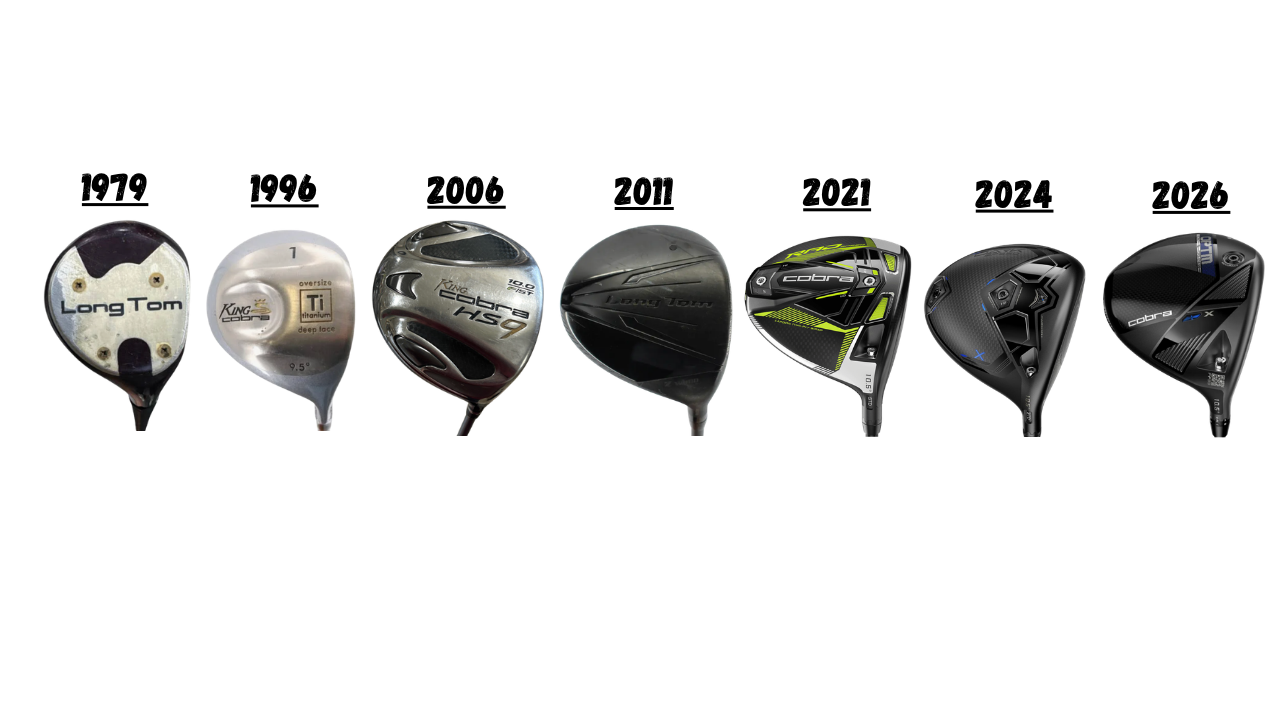
Cobra Drivers by Year Chart:
| Year Released | Cobra Driver Models | What Changed / Key Attributes | Price / Where to Buy |
|---|---|---|---|
| 2026 | OPTM X | Debuted Cobra’s POI (Product of Inertia) design, engineering the head to resist face twisting on the toe-up and toe-down axis for tighter shot dispersion. Pairs a forged H.O.T. Face with the FutureFit33 hosel for independent loft and lie tuning. | |
| OPTM LS | The low-spin build in the OPTM family, with a raised rear section and taller crown peak for the most compact, 445cc address look in the lineup. Adds a third adjustable weight port so faster swingers can dial spin down further. | ||
| OPTM Max-D | Brought heel-biased weighting and a lower, draw-friendly center of gravity to the OPTM range for golfers who need help squaring the face. Shares the same carbon crown and titanium frame as its siblings, tuned instead for shot-shape correction. | ||
| OPTM Max-K | Chases stability above all else, targeting one of Cobra’s highest-ever MOI figures for golfers who prioritize straight over long. Uses the same multi-material gloss carbon and titanium build as the rest of the 2026 lineup. | ||
| OPTM Max-D Lite | A lighter-swinging version of the Max-D, trimming shaft and total club weight to help golfers who struggle to generate speed still get the ball airborne. Keeps the draw-biased weighting of the standard Max-D underneath. | ||
| King Tec Mini Driver | Cobra’s entry into the mini driver trend, splitting the difference between a driver and fairway wood for tee shots on tight, tree-lined holes. The smaller head trades some forgiveness for extra control off the tee. | ||
| OPTM Max-K Women’s | Brings the Max-K’s forgiveness-first design into a build with women’s-specific shaft weight and length for slower swing speeds. Same POI-focused engineering, scaled for a different player profile. | ||
| OPTM Max-D Women’s | Pairs the draw-biased Max-D head with women’s shaft and loft specs to help higher-handicap golfers fight a slice. Carries over the FutureFit33 hosel for on-course adjustability. | ||
| OPTM Max-K Junior | A scaled-down Max-K built with a lighter, shorter shaft so junior golfers can generate speed with a head shape that still forgives off-center hits. | ||
| 2025 | DS-ADAPT X | Brought the debut of FutureFit33, letting golfers dial loft and lie independently across 33 combinations instead of the linked settings older hosels forced. Balanced front-and-back weighting gave it a 460cc profile suited to any skill level. | |
| DS-ADAPT LS | The low-spin sibling in the DS-ADAPT release, with a raised rear, taller crown, and the tightest 445cc profile in the family for faster swingers wanting shape control. Added a third weight port for extra spin tuning. | ||
| DS-ADAPT MAX-K | Chased a claimed 10,000 MOI, the highest stability figure Cobra had built into a driver at the time, aimed at golfers who value dead-straight flight over outright speed. | ||
| DS-ADAPT MAX-D | Introduced a low, heel-biased center of gravity to actively fight a slice, giving the DS-ADAPT range its dedicated draw option. | ||
| DS-ADAPT MAX-K Women’s | Applied the Max-K’s stability focus to a women’s-specific build, keeping the forgiving head shape with shaft and swingweight suited to slower speeds. | ||
| DS-ADAPT MAX-D Women’s | Combined the draw-biased Max-D shaping with women’s shaft and loft specs, giving slower swingers extra help squaring the face at impact. | ||
| 2024 | Darkspeed X | Reworked Cobra’s internal weighting into a suspended PWR-Bridge, using AI modeling to push mass lower and further forward than any earlier Cobra driver. Paired it with a 13% larger PWRSHELL face for more speed across the hitting area. | |
| Darkspeed LS | Took the Darkspeed platform and trimmed spin for faster swingers, using the same suspended PWR-Bridge weighting in a shape built for shot-shaping control. | ||
| Darkspeed Max | Leaned the Darkspeed technology toward forgiveness, spreading the PWR-Bridge weighting for maximum stability rather than low spin. | ||
| Darkspeed Max Womens | Brought the forgiveness-focused Darkspeed Max shaping into a women’s build with lighter shaft weight and loft options suited to slower swing speeds. | ||
| 2023 | AeroJet | Cobra’s first driver built around aircraft-inspired aerodynamics, adding curvature to the crown and skirt for a claimed 1.5 mph more clubhead speed than the prior LTDx. Debuted the PWRSHELL face insert alongside a new PWR-Bridge weighting system. | |
| AeroJet LS | Applied the same aero-first shaping to a lower-spin, more compact head for faster swingers chasing shot-shaping control. | ||
| AeroJet Max | Widened the AeroJet shape for maximum forgiveness, aiming its aerodynamic gains at golfers who wanted more stability than workability. | ||
| AeroJet Max Women’s | Carried the Max head’s forgiveness into a women’s-specific shaft and loft build for slower swing speeds. | ||
| AeroJet Max Junior | Scaled the AeroJet Max down with a lighter, shorter shaft so junior golfers could swing freely while keeping the forgiving head shape. | ||
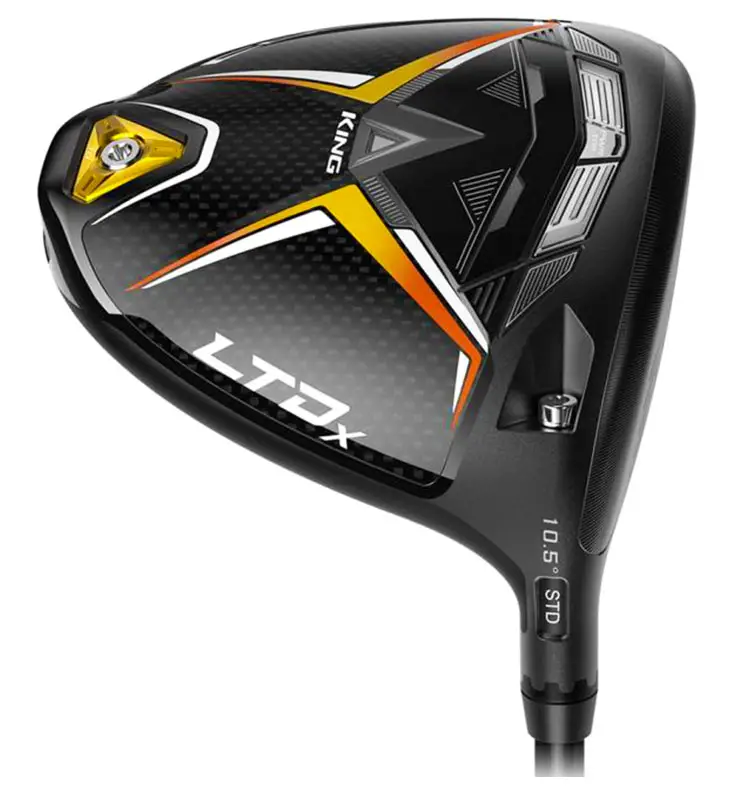
| 2022 | LTDx | Introduced PWR-COR, a 19-gram multi-material weight fused low and forward on the face, paired with an AI-mapped H.O.T. Face tuned across 15 zones. Cobra called it the first driver with zero negative CG, claiming a 5,200 MOI for a rare mix of speed and stability. | |
| LTDx LS | Took the PWR-COR weighting and wrapped it in a smaller, lower-spin shape for better players who wanted to shape shots off the tee. | ||
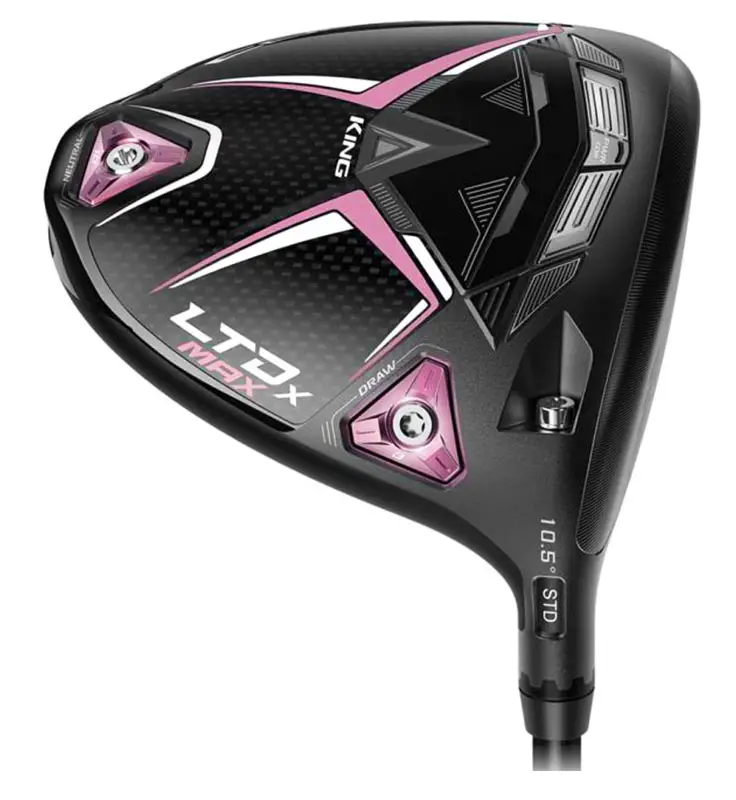
| LTDx Max | Spread the LTDx’s PWR-COR mass toward the perimeter instead of low and forward, prioritizing forgiveness and a higher launch over outright ball speed. | ||
| LTDx Max Women’s | Brought the Max head’s forgiveness into a women’s-specific build with lighter shaft weight and adjusted loft for slower swing speeds. | ||
| LTDx Max Junior | A junior-length, junior-weight version of the LTDx Max, keeping the forgiving head shape while scaling the shaft down for younger golfers. | ||
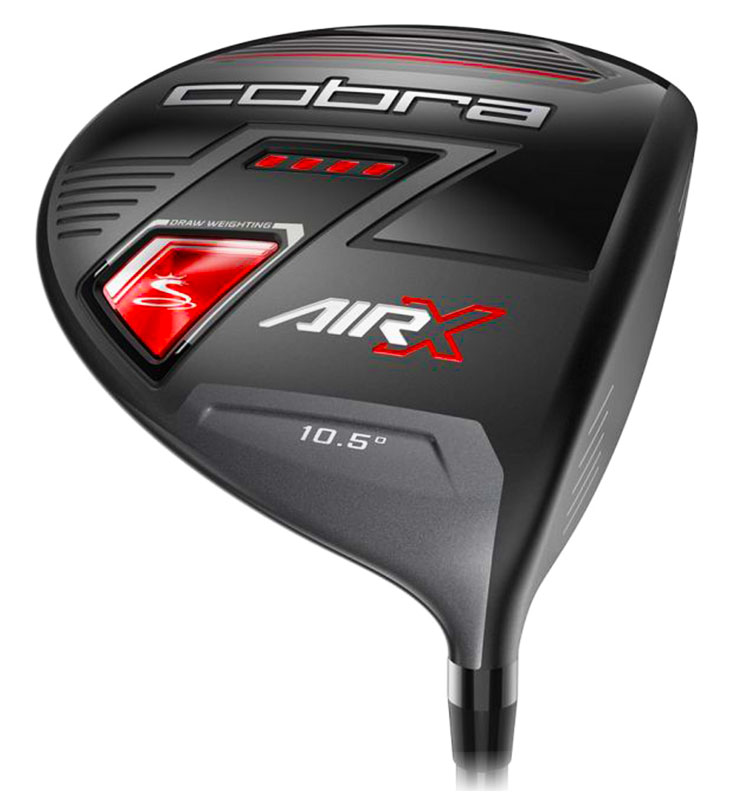
| Air-X Straightneck | Cut total driver weight to 277 grams through a lighter grip, shaft, and a 30% thinner carbon crown, aimed at golfers who needed more clubhead speed from a lighter swing. Held MOI near 5,000 despite the weight savings. | ||
| Air-X Offset | Added 20% more offset than the previous F-Max generation to the Air-X’s lightweight build, giving slice-prone golfers extra help squaring the face. | ||
| Air-X Women’s Straightneck | Applied the Air-X’s ultralight shaft and thin carbon crown to a women’s-specific build for golfers who want speed from a lighter total club weight. | ||
| Air-X Women’s Offset | Combined the Air-X’s slice-correcting offset with women’s shaft and loft specs for additional forgiveness at slower swing speeds. | ||
| 2021 | Radspeed | Introduced a CNC-milled Infinity Face that expanded the milled zone by 95%, plus a T-Bar chassis that shifted 13 grams of weight forward and deep to add ball speed and cut spin. | |
| Radspeed Tour Length | Took the Radspeed head and paired it with a standard, non-extended shaft length for golfers who wanted the technology without the longer stock build. | ||
| Radspeed XB | Widened the Radspeed shape for extra stability without adding offset, giving better players a forgiving option that still let them work the ball. | ||
| Radspeed XB Tour Length | The XB’s forgiving head in a standard-length build, aimed at golfers who wanted stability without the extra shaft length. | ||
| Radspeed XB Women’s | Brought the XB’s forgiveness into a women’s-specific shaft and loft configuration for slower swing speeds. | ||
| Radspeed XB Junior | A junior-scaled version of the XB, shortening the shaft and lightening total weight for younger golfers. | ||
| Radspeed XD | Added a fixed 10-gram heel weight to actively close the face at impact, becoming Cobra’s first draw-biased driver that didn’t lean on extra offset to fight a slice. | ||
| 2020 | Speedzone | Expanded the CNC-milled Infinity Face into the toe and heel for 95% more milled coverage, and used a 360-degree carbon crown to free up 25 grams redistributed low in the head. | |
| Speedzone Xtreme | Stretched the Speedzone shape front to back and moved to a single rear weight, trading adjustability for a higher, more stable MOI build. | ||
| 2019 | F9 | Cobra’s first driver to combine aerodynamic shaping, a low CG, and a CNC-milled face in one head, using E9 Speed Tuned Technology to fit launch and spin to different swing types. | |
| F9+ | A smaller, lower-spin version of the F9 aimed at faster swingers who wanted more shot-shaping control from the same aero platform. | ||
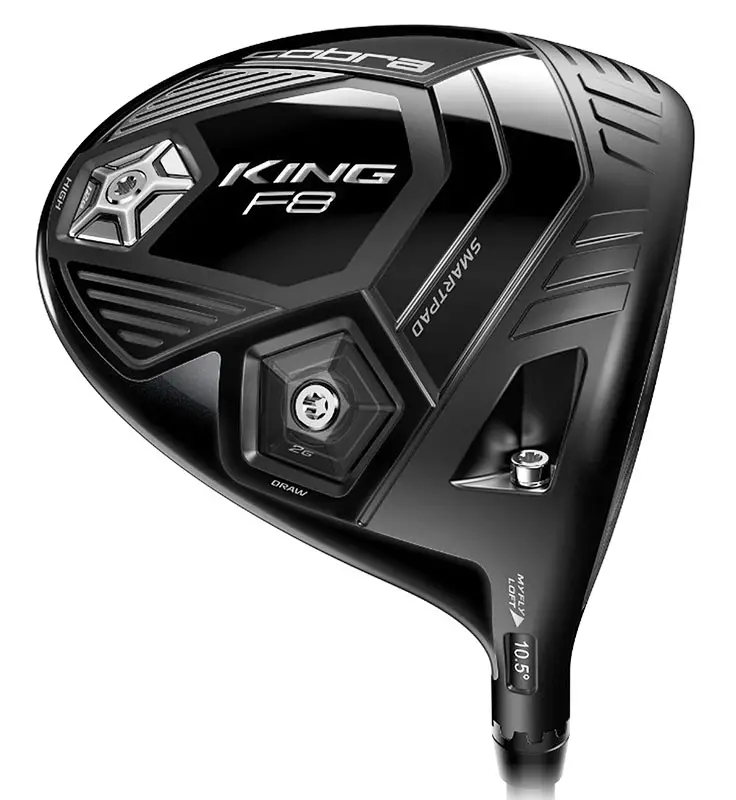
| 2018 | F8 | Introduced a 5-layer carbon crown and Aero Trips, drag-reducing polymer ridges 90% lighter than titanium, to lower CG without raising it back up for aerodynamics. The face went 100% CNC milled, 3% thinner and 10% lighter than the prior generation. | |
| F8+ | Paired the F8’s carbon crown and CNC-milled face with a smaller, lower-spin shape built for golfers chasing more shot-shaping control. | ||
| F8 Women’s | Brought the F8’s carbon crown and milled face construction into a women’s-specific shaft and loft build. | ||
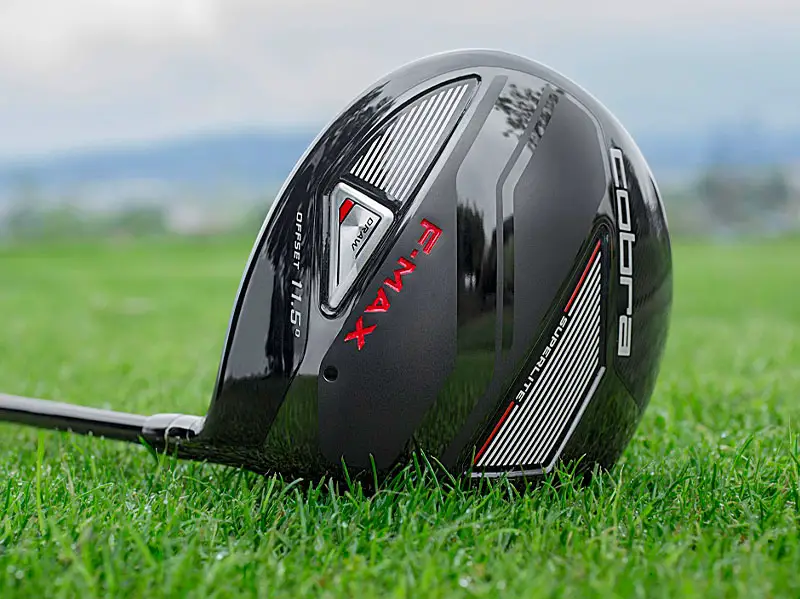
| F-Max | Debuted a sub-50-gram SUPERLITE shaft alongside the F8’s lightweight construction, aimed at golfers who needed more speed from a lighter total swing weight. | ||
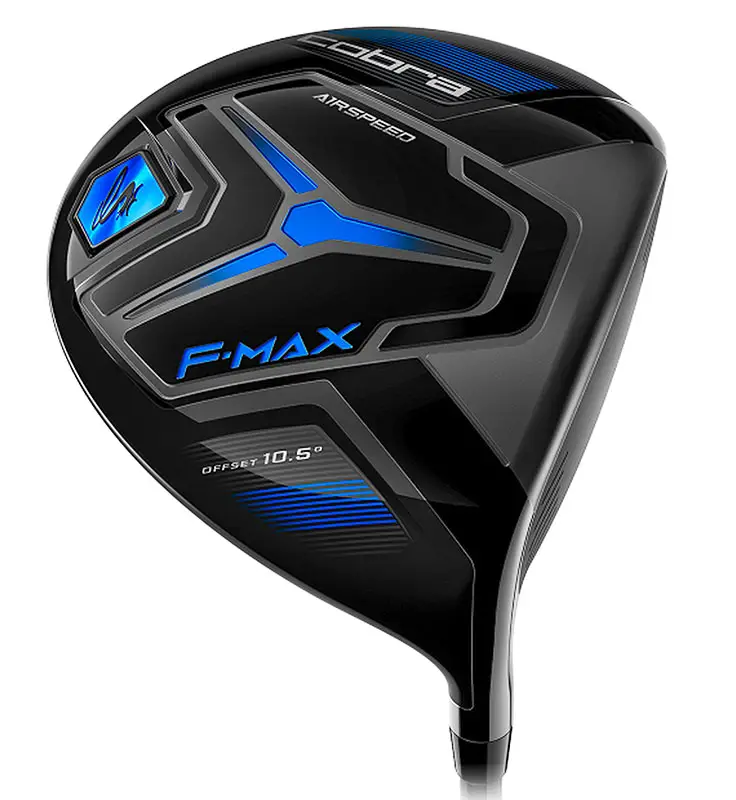
| F-Max Offset | Added extra offset to the F-Max platform to help golfers who fight a slice square the face more easily at impact. | ||
| F-Max Airspeed | Cobra’s straight-neck F-Max build, pairing the SUPERLITE shaft with a face-forward hosel for golfers who didn’t need extra slice correction. | ||
| F-Max Superlite | Pushed total club weight down even further than the standard F-Max, prioritizing swing speed over adjustability for slower-swinging golfers. | ||
| F-Max Superlite Offset | Combined the Superlite’s ultralight build with added offset for golfers who wanted both extra speed and slice correction. | ||
| F-Max Women’s | Applied the F-Max Superlite’s lightweight shaft and offset design to a women’s-specific configuration. | ||
| 2017 | F7 | Enlarged the E9 face enough to retire the old Speed Channel design, adding a TeXtreme carbon crown 20% lighter than titanium to push mass lower and deeper in the head. | |
| F7+ | A smaller-profile F7 built for lower spin and more workability, aimed at faster swingers who wanted to shape shots off the tee. | ||
| F7 Women’s | Brought the F7’s TeXtreme crown and E9 face into a women’s-specific shaft and loft build for slower swing speeds. | ||
| F7 Junior | A scaled-down F7 with a shorter, lighter shaft so junior golfers could swing the same E9 face technology. | ||
| 2016 | LTD | Reached what Cobra called Zero CG by combining a 16-gram SpacePort tungsten weight with an 811 titanium body, pushing the center of gravity down to the neutral axis for extreme low-spin stability. | |
| F6 | Added adjustable front-to-back CG tuning to the Forged E9 face, letting golfers choose a penetrating flight or a higher, more forgiving one from the same head. | ||
| F6+ | Introduced CarbonTrac, a carbon fiber sole track that freed up an 18-gram weight to move further along the head than earlier track systems allowed. | ||
| F6 Women’s | Carried the F6’s adjustable CG tuning into a women’s-specific shaft and loft build. | ||
| MAX | Cobra’s dedicated 2016 game-improvement driver, using draw-biased weighting and Speed Channel forgiveness to cut mis-hit distance loss and tighten dispersion for higher handicappers. | ||
| MAX Women’s | Brought the MAX’s draw-biased, forgiveness-first design into a women’s-specific configuration for slower swing speeds. | ||
| 2015 | Fly-Z | Moved the Speed Channel to the face’s perimeter instead of underneath it, freeing up 2 grams to enlarge the sweet spot by 18% and add yards on off-center hits. | |
| Fly-Z Women’s | Applied the Fly-Z’s perimeter Speed Channel design to a women’s-specific shaft and loft build. | ||
| Fly-Z+ | A smaller, lower-spin Fly-Z shape aimed at better players who wanted more workability from the Speed Channel face. | ||
| Fly-Z XL | Went all-titanium with a high-MOI, offset design built for up to 17.5 yards of draw bias, Cobra’s most forgiving, slice-fighting option in the Fly-Z family. | ||
| Fly-Z XL Women’s | Carried the XL’s draw-biased, high-MOI shaping into a women’s-specific shaft and loft configuration. | ||
| 2014 | Bio Cell | Replaced the prior AMP Cell weighting with BiO Cell crown and face technology to push CG lower and MOI higher, while keeping the MyFly8 adjustable hosel. | |
| Bio Cell+ | A more compact, 440cc version of the Bio Cell with a shorter stock shaft, aimed at better players who wanted lower spin over maximum forgiveness. | ||
| Bio Cell Women’s | Brought the Bio Cell’s lowered CG and adjustable hosel into a women’s-specific shaft and loft build. | ||
| Baffler XL | Marked the Baffler’s 40th anniversary with a face 17% bigger than the AMP Cell Offset it replaced, plus 30% more tungsten weighting for an even lower CG. | ||
| Baffler Women’s | Applied the Baffler XL’s low-CG, rail-soled design to a women’s-specific shaft and configuration. | ||
| 2012 | Amp Cell | Introduced E9 Face Technology with dual roll, an elliptical face shape 12% larger to improve mis-hits both toe-to-heel and high-to-low, plus a 6-setting MyFly hosel. | |
| Amp Cell Women’s | Carried the Amp Cell’s E9 dual-roll face and adjustable hosel into a women’s-specific shaft build. | ||
| Amp Cell Tween | A youth-sized Amp Cell built for teenage golfers transitioning from junior to adult-length equipment. | ||
| Amp Cell Pro | A lower-spin Amp Cell shape aimed at faster swingers and better players who wanted more workability from the E9 face. | ||
| Amp Cell Offset | Added extra offset to the Amp Cell platform to help golfers who fight a slice deliver the face square at impact. | ||
| Amp Cell Offset Women’s | Combined the Amp Cell Offset’s slice correction with women’s shaft and loft specs for slower swing speeds. | ||
| ZL Encore | Carried the E9 dual-roll face into a simplified, three-setting hosel (open, neutral, closed) instead of the Amp Cell’s full MyFly adjustability. | ||
| 2011 | S3 | Debuted E9 Face Technology, a taller elliptical face shape 30% larger than before, with a beveled perimeter that shifted weight low and back for better launch. | |
| S3 Max | A larger-profile S3 built for extra forgiveness over the standard head, aimed at golfers who wanted more stability from the E9 face. | ||
| S3 Women’s | Applied the S3’s E9 face design to a women’s-specific shaft and loft build. | ||
| S3 Max Women’s | Combined the Max head’s added forgiveness with women’s shaft and loft specs for slower swing speeds. | ||
| Long Tom (relaunch of original) | Revived Cobra’s original 1979 concept as a limited “Raw” reissue, pairing an extra-long shaft with a distance-focused build for golfers chasing the same idea that started the company. | ||
| 2010 | ZL (Zero Limits) | Set out to become Cobra’s longest driver in company history, using 9 Point Face Technology and a removable swingweight screw so fitters could custom-position CG and MOI. | |
| ZL Limited Edition | A special-run colorway of the ZL head, carrying the same 9 Point Face and adjustable swingweight screw as the standard release. | ||
| S2 | Used the same 9 Point Face insert as the ZL in a simpler, 3-way adjustable hosel (open, square, closed) with a PVD black finish. | ||
| S2 Offset | Added offset to the S2 platform for golfers who wanted extra help squaring the face against a slice. | ||
| S2 Women’s | Brought the S2’s 9 Point Face and adjustable hosel into a women’s-specific shaft and loft build. | ||
| S2 Offset Women’s | Combined the S2 Offset’s slice correction with women’s shaft and loft specs for slower swing speeds. | ||
| 2009 | S9-1 | Introduced “Hotter 9 Points” technology with a Dual Rhombus face insert and Speed Tuning that customized each build by player type and swing speed. | |
| S9-1 F | The forgiveness-focused build in the S9-1 range, tuned for golfers who wanted stability over workability. | ||
| S9-1 M | The draw-biased, offset build in the S9-1 line, aimed at golfers looking for the most slice correction in the range. | ||
| S9-1 M Offset | Pushed the M model’s draw bias further with additional offset for maximum slice-fighting help. | ||
| S9-1 Pro S | A low-spin, high-launch build in the S9-1 Pro line, tuned for players who generate faster ball speeds off the tee. | ||
| S9-1 Pro D | The compact, better-player build in the S9-1 Pro range, giving skilled ball strikers a smaller look with room to shape shots. | ||
| L5V | Preceded the S9-1 with the largest, most forgiving face Cobra had built to that point, plus Adjustable Flight Technology for early face-angle tuning. | ||
| 2008 | L4V X | Pushed all four USGA performance limits, MOI, size, COR, and volume, in a compact-profile build aimed at faster swingers who still wanted forgiveness. | |
| L4V F | Used the same Dual Rhombus face and MOI-maxing tungsten backweighting as the X, in a shape built for the average player. | ||
| L4V M | The most forgiving, offset build in the L4V range, aimed at golfers who needed the most help squaring the face. | ||
| J Speed | A junior-focused release built to bring Cobra’s speed-tuned face technology into a lighter, shorter shaft for young golfers. | ||
| 2007 | Speed LD F | Pushed clubhead dimensions to the USGA limit for a 5,000 MOI build, pairing a milled Dual-Rhombus face with Speed Tuning for faster ball speeds across player types. | |
| Speed LD F Offset | Added offset to the Speed LD F shape to help golfers who fight a slice deliver a squarer face at impact. | ||
| Speed LD M | The draw-biased build in the Speed LD range, combining offset and a closed face to fight a slice more aggressively than the F model. | ||
| Speed LD M Offset | Pushed the M model’s slice correction further with additional offset for maximum draw bias. | ||
| Speed LD Seniors | A lighter, more flexible-shaft build of the Speed LD aimed at golfers with slower swing speeds. | ||
| Speed LD Women’s | Brought the Speed LD’s maxed-out MOI and Speed Tuning into a women’s-specific shaft and loft build. | ||
| Speed Pro X | The lower-spin, better-player build introduced alongside the Speed LD, aimed at faster swingers who wanted more workability. | ||
| Speed Pro D | A compact-profile Speed Pro build for skilled ball strikers who wanted to shape shots off the tee. | ||
| HS9 X | Paired golf’s largest face area at the time with a Triple Weighting System, tuned for faster swingers chasing distance over forgiveness. | ||
| HS9 F | The middle-ground HS9 build, balancing the carbon composite crown’s added MOI with a shape suited to the average player. | ||
| HS9 M | The most forgiving, draw-biased build in the HS9 range, aimed at golfers who needed the most slice correction. | ||
| 2006 | HS9 | Combined golf’s largest face area at the time with a carbon composite crown and sole and a Triple Weighting System to push CG lower and MOI higher across three player-specific builds. | |
| 2005 | X Speed | Built with a square face for low-handicap golfers generating over 150 mph of ball speed, giving better players room to work the ball intentionally. | |
| F Speed | The mid-handicap build in the Speed series, shallower than the X but deeper than the M, with a slight draw bias for the average player. | ||
| M Speed | The most forgiving Speed model, combining offset and a closed face for maximum slice correction. | ||
| M Speed Offset | Added further offset to the M Speed shape for golfers who needed the most help squaring the face. | ||
| 460 SZ | Expanded Cobra’s Sweet Zone face technology into a maximum 460cc head with heel and toe weighting for extra forgiveness on mis-hits. | ||
| 2004 | COMP 454 | Introduced an ultralight carbon composite crown that freed up 15 grams to move low and back in the head, raising launch angle and carry distance. | |
| COMP 414 | A smaller-profile COMP build for golfers who wanted the carbon composite crown’s weight savings in a more compact, workable shape. | ||
| COMP 414 Tour | The lowest-spin build in the COMP line, aimed at tour-caliber players who wanted maximum shot-shaping control. | ||
| SS 427 | Widened the Sweet Spot face design into a bigger, deeper head for extra forgiveness on off-center strikes. | ||
| 2003 | SS 380 | Brought Sweet Spot face technology into a 380cc titanium head, an early example of Cobra pairing lightweight titanium with a wider forgiveness zone. | |
| SS 310 | A smaller-headed Sweet Spot build for golfers who preferred a more compact, workable look at address. | ||
| SZ (Sweet Zone) | Expanded on the Sweet Spot concept with nine hot points spread across the face for a wider zone of consistent ball speed. | ||
| 2002 | SS (Sweet Spot) | Cobra’s original Sweet Spot release, using a thin beta titanium face and a low, deep heel weight pad to square the face more easily at impact. | |
| 1999 | Gravity Back | Introduced a copper backweight that pushed mass low and deep behind the face, an early example of Cobra using external weighting to raise MOI and forgiveness. | |
| 1997 | Ti Deepface | Brought a deeper, more compact titanium head to Cobra’s original Ti line, memorably the driver Tiger Woods used to win the 1997 Masters. | |
| 1996 | Ti Woods | Cobra’s first titanium driver release, arriving as major manufacturers raced to adopt the lighter, faster material through the mid-1990s. | |
| Ti Offset Woods | Paired the Ti Woods’ titanium head with added offset for golfers who needed extra help squaring the face. | ||
| 1984 | Long Tom II | Refined the original Long Tom’s extra-long graphite shaft concept with improved shaft consistency and feel five years after the debut. | |
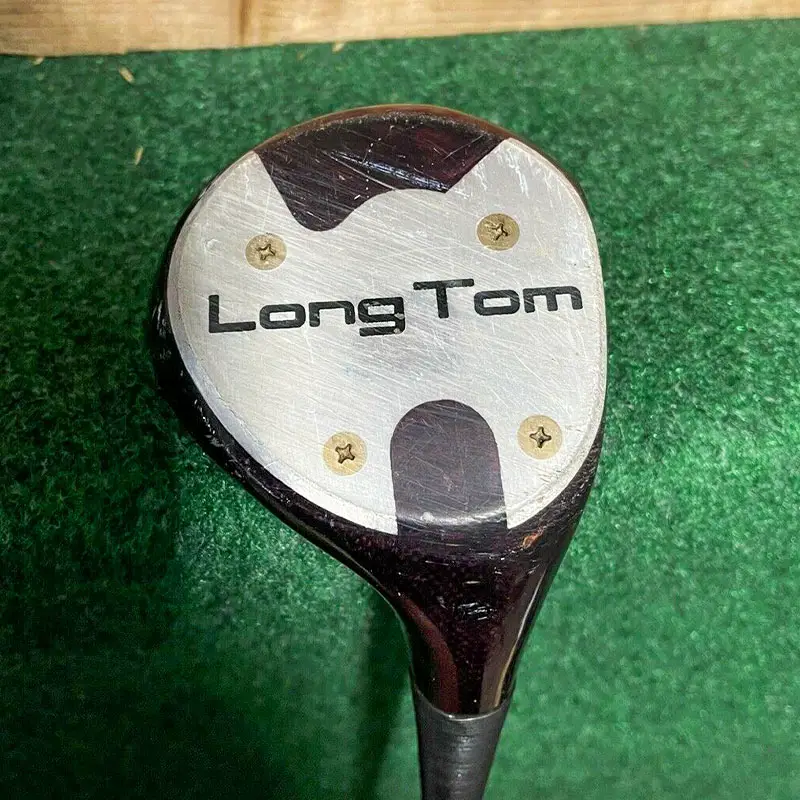
| 1979 | Long Tom | Cobra’s first-ever product, pairing a lightweight graphite head with a 46-inch shaft, three inches longer than standard, to push distance beyond what steel-shafted drivers offered at the time. |
Cobra Drivers in 2026
Cobra took a different angle in 2026 with the OPTM family, shifting the conversation away from speed and toward accuracy. The main idea of the whole lineup is POI design, which stands for Product of Inertia and measures how much the clubhead wants to twist across multiple axis at impact rather than just on a single plane like traditional MOI. By optimizing head shaping and weight placement specifically to minimize that twisting, Cobra claims up to 23 percent tighter shot dispersion compared to the DS-Adapt family it replaced. I can’t prove this myself, but 23% is a massive claim.
The four model lineup kept the same naming structure as 2025 with the X, LS, Max-K, and Max-D, all carrying the FutureFit33 hosel system forward with its 33 unique loft and lie settings and adding an updated H.O.T. Face with 15 thickness zones built for more ball speed across a bigger portion of the face. The Max-K remains Cobra’s most forgiving option and the LS profile remains for faster swing speeds who want workability and low spin. All four models hit retail on January 20, 2026. For a brand that has built its reputation on being one of the most innovative equipment companies in the game, the OPTM lineup makes a strong case that the best Cobra driver they have ever made.
Cobra Drivers in 2025
The DS-Adapt family landed in January 2025 and the headline was not the speed gains, even though those were real. The headline was the FutureFit33 hosel system, which offered 33 unique combinations of loft and lie settings and was more than four times as adjustable as anything Cobra had offered before. For golfers who have ever struggled to find a driver that sits perfectly square at address, that number matters more than it sounds.
The family kept the same four-model structure as the 2024 Darkspeed lineup with the X, LS, Max-K, and Max-D, but each was built with an updated Adaptive Weighting system and a larger forged face insert running an expanded H.O.T. Face design for more ball speed across a bigger hitting area. The Max-K hit the 10,000 combined MOI threshold, putting it among the most forgiving drivers in the entire industry that year. Tour players were putting DS-Adapt heads in play before the official release was even announced, which tells you everything you need to know about how the product tested behind closed doors.
Cobra Drivers in 2024 And Before
Darkspeed X: Best for mid to low handicappers looking for the best combination of speed and forgiveness. Mid launch, low spin, and traditional head shape for maximum distance.
Darkspeed LS: For low handicappers and better looking for the lowest launch and spin out of their driver. Designed for players with top end swing speeds.
Darkspeed Max: Highest MOI in the lineup, the Max is best for higher handicappers looking for maximum forgiveness. High launch and mid spin with a draw bias to help with the common right miss.
In 2022, the LTDx line was announced/released, upgrading from the original LTD from 2016. There are 3 main models offered, a regular (The LTDx), a low spin (The LTDx LS), and a MAXimum forgiving option (The LTDx Max). The max also offers Junior models, and a driver for women.
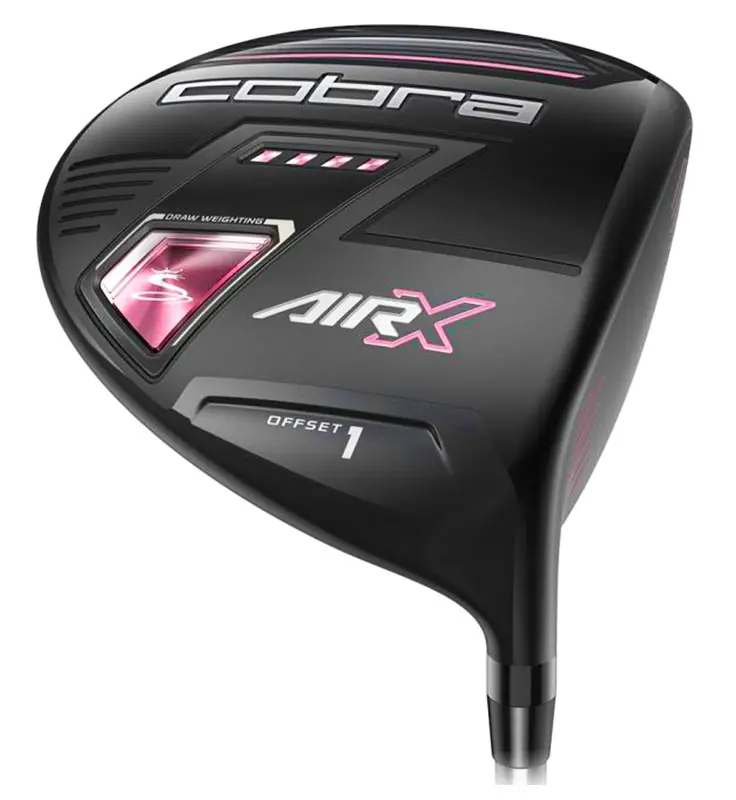
A more budget driver option in the Cobra Air X Driver review, Air-X Straight Neck, and Air-X Women’s were released in 2022 as well.
Still relatively new, the Radspeed driver family was released in 2021 with 7 different models, not including all the custom color options as well. There is a regular Cobra Radspeed model (our review), a Tour Length option, a low spin option in the XB (our review), a draw biased option in the XD (our review), women’s, junior, and even a few more.
Get Smarter About Your Swing
Join thousands of golfers getting exclusive swing tips, club reviews, and gear guides straight to their inbox – before they hit the site.
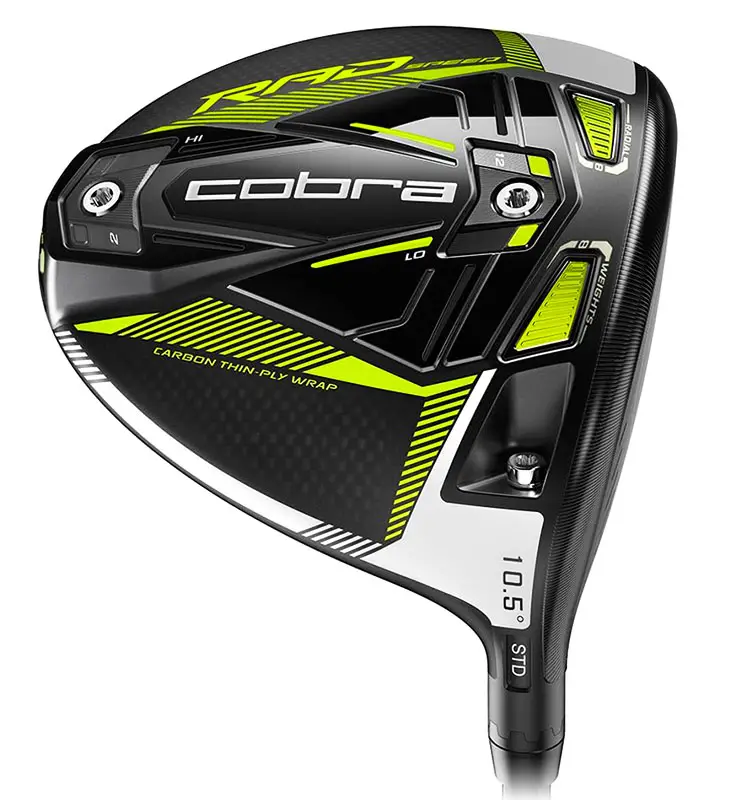
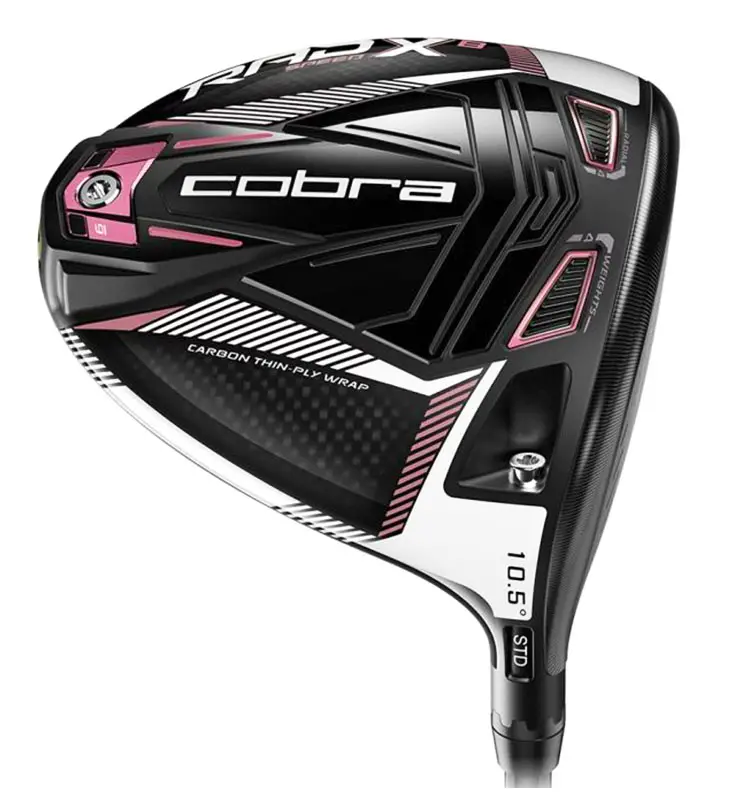
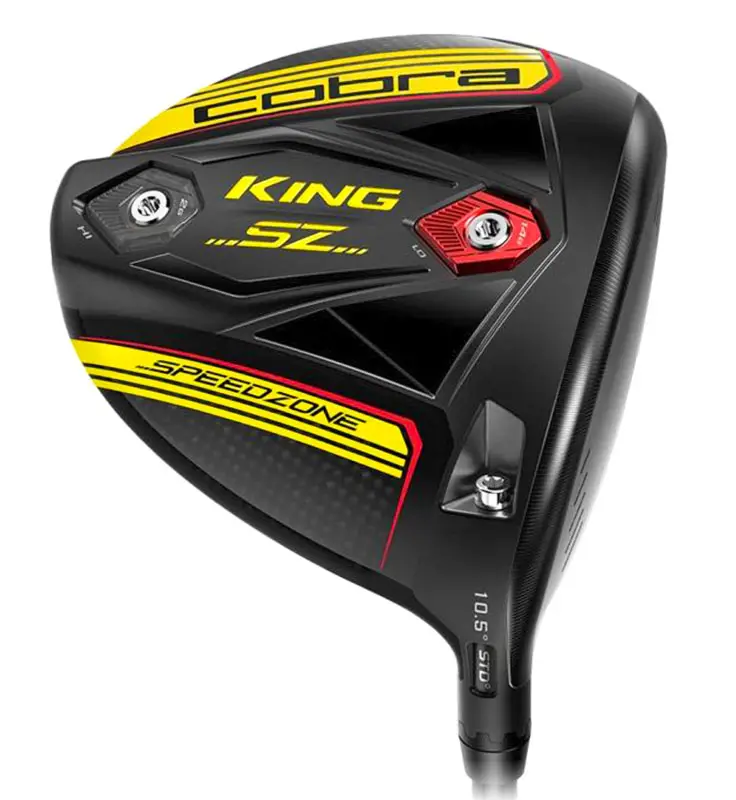
Prior to the Radspeed was the Speedzone and Speedzone Xtreme in 2020, the F9 and F9+ in 2019, the F8 and F8+ in 2018 (you can see where this is going… all the way down to the F6 in 2016).
A really underrated (and beautiful) line is the F-Max from 2018. There are a lot of variation options, including an offset model which really helps out those struggling with a slice.
How It All Started
Cobra golf was founded in 1973 by an Australian amateur golf champion named Thomas Crow.
Their first contribution to the golf club community was the Baffler, the very first “utility” club. The patented sole plate design was effective from many different types of lies.
It wouldn’t be until 1979 that Crow and Cobra Golf would release a driver… Long Tom, a 46-inch long driver with a graphite shaft and head.
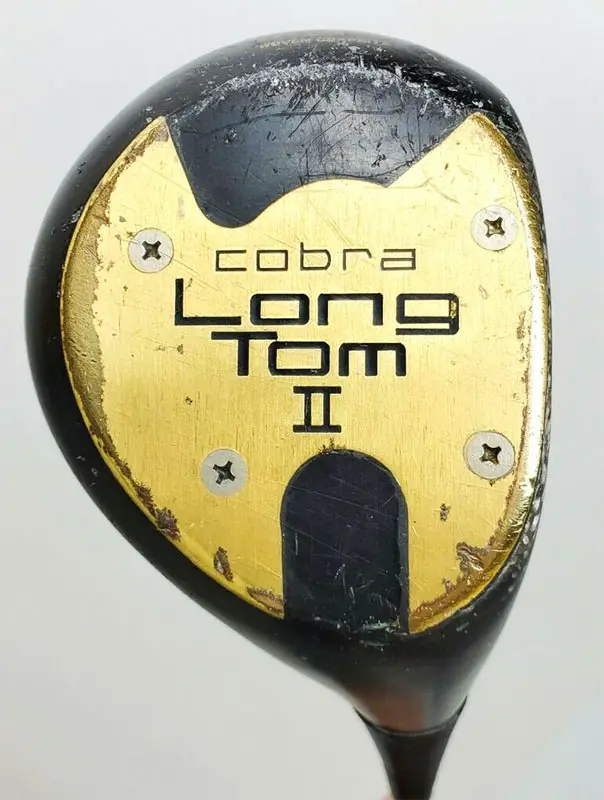
Cobra pioneered the industry by becoming the first US club manufacturer to offer graphite shafts in their woods and irons as a stock option in the mid “80s. They even offered the Senior line and Lady Cobra line with game improvement technology.
Watch
New videos every week on our youtube channel
Cobra would first use the “King Cobra” designation in 1994 with the release of the King Cobra oversize irons. The King name became a staple after that.
Frequently Asked Questions (FAQ)
As of 2026, the newest Cobra drivers are the OPTM family — OPTM X, OPTM LS, OPTM Max-D, OPTM Max-K, and OPTM Max-D Lite. The Max-K is Cobra’s most forgiving model in the lineup, the LS is built for faster swing speeds who want low spin and workability, and the Max-D is the draw bias option for golfers who need help keeping the ball left of trouble. Cobra also released the King Tec Mini Driver alongside the OPTM family in 2026.
The Cobra Darkspeed drivers came out in January 2024. The family included three models at launch — Darkspeed X, Darkspeed LS, and Darkspeed Max — all featuring an AI designed PWRSHELL H.O.T. Face that was 13 percent larger than the previous generation, a re-engineered PWR-Bridge structure, and aerodynamic shaping specific to each model’s target player type.
The three Darkspeed models each target a different type of player. The LS is the most aerodynamic and fastest head Cobra has ever made, built for high swing speed players who want low spin and the ability to shape shots. The X is the middle ground option aimed at the widest range of golfers, offering a combination of speed and forgiveness with a front-to-back adjustable CG. The Max is the draw biased, highest MOI option in the lineup built for golfers who need maximum forgiveness and help keeping the ball in play.
DS-Adapt is short for Darkspeed Adapt and it was Cobra’s 2025 driver family. The name reflects the two things Cobra built the lineup around, more speed through improved aerodynamics and a larger H.O.T. Face, and more adaptability through the FutureFit33 hosel system that offers 33 unique loft and lie settings. That hosel was more than four times the adjustability of Cobra’s previous system and more than double what any competitor offered at the time.
FutureFit33 is Cobra’s adjustable hosel system introduced on the DS-Adapt family in 2025. It offers 33 unique combinations of loft and lie settings, which is a significant step beyond the standard 8 position hosel most brands use. The idea is that a golfer can independently adjust loft and lie to dial in a perfectly square face at address. It was the most adjustable hosel system in the golf industry when it launched.
The OPTM Max-K is the best current option for high handicappers, achieving 10,000 combined MOI which puts it in the same forgiveness conversation as TaylorMade’s Qi4D Max and Ping’s G440 Max. The DS-Adapt Max-K from 2025 is also an excellent pick at a lower price point now that the OPTM series has replaced it. Both are built with fixed back weighting, high launch, and draw neutral flight that makes them easy to keep in play off the tee.
The original King Cobra driver debuted in 1992 and was one of the most recognized drivers of its era. The King name has remained one of Cobra’s most enduring brand identities, carrying forward through the King F series, King SpeedZone, and most recently the King Tec Mini Driver released in 2026. The original King Cobra was notable for its oversized head at a time when most drivers were still relatively compact by today’s standards.
Cobra has been on a roughly annual release cycle for their flagship driver family since the mid-2010s. The AeroJet came out in 2023, the Darkspeed replaced it in 2024, the DS-Adapt followed in 2025, and the OPTM arrived in 2026. That is a fast cadence by any standard, though the real performance jumps tend to happen every two generations rather than year over year. Shopping one generation back on Cobra drivers is consistently one of the best value moves in golf equipment.
The OPTM Max-D and DS-Adapt Max-D are both built specifically to help golfers who struggle with a slice. The Max-D designation across the Cobra lineup signals a draw biased design with heel biased CG placement that promotes a right to left ball flight. The Darkspeed Max from 2024 is also worth a look at used prices if budget is a factor since the draw bias and forgiveness profile on that model remains strong.
Cobra drivers hold up particularly well on the used market because the brand consistently prices below the big three at retail, which means used prices are already fair to begin with. The Darkspeed X and AeroJet from 2023 and 2024 are both excellent picks at current used prices. Cobra also tends to engineer real performance improvements each generation, so going one year back rarely costs you much on the course but saves you a meaningful amount at the checkout desk.
Cobra has historically had strong tour presence through Rickie Fowler, who was one of the brand’s most prominent equipment ambassadors for over a decade. Beyond individual player relationships, Cobra’s driver technology has consistently appeared at the highest levels of the game including on the PGA Tour and LIV Golf. The Darkspeed and DS-Adapt families both saw tour players put them in play ahead of the official retail launches, which is typically a strong signal of real performance confidence in the product.
Other Brands Drivers By Year

Leave a Comment