
This post may include affiliate links. We do earn a commission for products purchased using these links (at no additional cost to you). Thank you for supporting Swing Yard, making the content you see on this blog possible. For more information, please see our privacy policy for details.
*Read our review guidelines.
Key Takeaways – How to Break 90 in Golf
- Three putts need to be eliminated if you plan to break 90
- Learning to get tee shots on the fairway will make this process considerably easier
- One bad hole does not ruin the chances of breaking 90
- Getting up and down is something that you should practice much more often if you want to shoot in the 80s
Of all the scores that I have worked to shoot through the years, I found breaking 90 to be the most satisfying. When you shoot in the 100s and 90s, it feels a bit average. However, when you learn How to break 90, it’s sort of a right of passage that you have done it.
Breaking 90 is a bit more of a challenge because bogey is not going to be accepted throughout the course. The good news is there is still some room for error when attempting to break 90. You won’t need to hit every shot perfectly.
If you are ready to get your golf game to the next level and start shooting these lower scores, we have a complete guide to get it done!
What Does Breaking 90 in Golf Look Like?
To shoot 90, you will have to move beyond the mindset of breaking 100 and try to bogey every hole on the course. This means you get an extra shot on each hole to get the golf ball into the hole. Most golfers miss the green or the fairway or make a three-putt, and it turns into a bogey.
However, if you want to learn how to break 90 in golf, experts will tell you it’s all about the pars!
The more pars you can make, the better your chance of breaking 90. Even if you make a double bogey on a hole, the par can just about make up for it and have you back on track for shooting lower than 90.
One of my favorite mental concepts to have when breaking 90 is to think of bogey as par. You know you can make a bogey on every hole and shoot a 90, so try to break that par a few times. It can be as simple as that.
Here are the skills necessary to get it done.
How To Break 90 in Golf
At this point, it’s essential to break down each part of the game to understand what is involved in breaking 90. I will get into this in a little greater detail, and you can then choose which area of your game you need to work on.
Tee Shot
I have always found that one of the best ways to learn to break 90 in golf is to master the drive. It seems like this would be important for any score you want to shoot, and it is, but breaking 90 can be a game-changer.
Many golfers on the cusp of breaking 90 struggle to get their driver in the fairway.
If that is the case, you may continue to play bogey golf until you get this figured out.

You must try to get the golf ball in the fairway off the tee. I recommend practicing tee shots with more than just the driver. You should have a backup option for the days when the ball won’t fly straight off the tee.
If I strike my 5 wood well, it can sometimes roll almost as far as my driver. With the 5 wood being more forgiving, I can play aggressive golf and just have one extra iron into the green. It’s a great way to gain confidence off the tee.
Of course, at some point, you will want to learn to hit the tee shots with the driver. Having a short distance to the green is important as it will increase the chance of a par.
Fairway Consistency
Fairway shots for the golfer trying to shoot in the 80s can be inconsistent. If you want to hit more greens in regulation, it’s important to work on consistency from the fairway.
I don’t care if you can hit your 7 iron 160 yards if it doesn’t fly straight. You will be much better off with a 7-iron golf club that flies 140 yards if you know where it is going.
Many amateur golfers forget to work on alignment and setup in their fairway shots. Your setup and aim are crucial for hitting great golf shots, not just your swing.
Try to work on a pre-shot routine that gets you lined up correctly and ensures that you will land somewhere on or near the green.
If you often hit a draw or a fade, learn to play it to avoid bunkers or rough. Missing the green on your second shot makes the game harder.
Short Game
Speaking of up and down, this is the area of the game that mid-to-high handicappers looking to break 90 consistently need to work on the most.
After your approach to the green, it should take no more than two shots to get the ball into the hole. If it takes three shots, you will have double bogeys and bogeys all over your scorecard.
Think about a hole where you hit a perfect drive, and your approach shot just misses the green slightly. Take out your sand wedge, chip on, and make a short putt; not only have you beat the bogey, but you have parred the hole.

Now let’s take a look at that same hole played by a golfer who does not work on their short game as intently.
This player hits their approach shot in the same location, chips on the green but leaves a 30-foot putt, and then proceeds to three-putt. Instead of the four on the hole, you just turned it into a six.
Get Smarter About Your Swing
Join thousands of golfers getting exclusive swing tips, club reviews, and gear guides straight to their inbox – before they hit the site.
It’s as simple as that. The short game allows you to save strokes at a fast rate without having to worry about an approach shot that slightly misses the green.
The more time you spend playing golf, the more important you will realize this is. Find wedges that you love and incorporate pre-shot routines into your shorter shots as well.
Putting
As you saw from my last example, putting is just as important as chipping. Practice hitting putts from a variety of locations, and try to fine-tune your performance from less than six feet.
It’s just incredibly frustrating to miss a putt that is only three feet long, and it makes the entire round of golf have a different feel. If you want to shoot lower scores, making all of your putts from under 6 feet will certainly help.
Three putts are terrible, and if you have a practice green at your local course or even a carpet in your living room, you can work towards never three putting again.
When you get more confident about those putts that are less than 6 feet, you can then learn how to read greens better and get more aggressive with the longer putts. There is something quite mentally pleasing about knowing you are going to make the next putt.
Mental Game
The mental game is something you will work on for years to come. However, there are a few mental strategies that can help most golfers who are trying to break 90.
One of the most important things to me is to start to think positively even after a bad hole. If you have had a par or two and you make a triple bogey on the 7th hole, the round is not over. The putter does not need to be snapped; you simply need to move on.
Think about hitting the next shot and hitting it well.
Try to focus on one shot at a time, and you will notice that the round falls into place considerably easier.
When you get worked up, it will take your focus away from the positive that you have going on in your round. Watching golf on television should show you how these players who are used to hitting great shots sometimes make mistakes and learn to recover.Blow-up holes happen; just keep them to a minimum.
“Course management is crucial in golf. Having a clear plan for each hole, including which shots to take and which hazards to avoid, is essential. It’s not just about making good shots but also about strategic planning based on the course’s layout. After playing a few rounds, a clear mental picture of the course should develop, guiding future play.”
Warmup and Practice Plan to Break 90
Course management in golf is essential for success. It involves having a well-defined plan for each hole, including shot selection and avoiding hazards. Strategic planning based on the course layout is crucial for making the best decisions while playing. With experience, a clear mental image of the course develops, guiding future play.
Start your warmup at home and work on things like stretching and flexibility. Getting into better physical condition and making sure your body is warmed up to play can make a huge difference.

Learn from PGA Tour players that it takes a reasonable amount of time and effort to play your best golf. Getting into the proper mindset and patterns both on and off the course will help, especially if you can practice at home or in the office.
Golf Equipment
Equipment is expensive, and you don’t need to do it all at once. Perhaps update your long-game equipment one year and your putting game equipment the next.

Ultimately you want to pay attention to not just how new your equipment is, but whether or not it fits your needs as a player. When I consider what percent of golfers break 90, very few have the perfect set of clubs for their game.
Golf equipment adjustments, such as lie angle or shaft weight, can lead to improved consistency and lower scores.
FAQ
How to Break 90?
Here are a few of the most commonly asked questions about how to break 90. The skills you develop when learning to break 90 are also necessary to become a scratch golfer. Keep working on your game in this way, and you will find you can shoot any score you want.
There are about 25 to 35 percent of golfers that break 90. “When spending a lot of time on a golf course, you’ll notice that most players won’t shoot lower than 90. It’s difficult to know the exact number of golfers who break 90 because of mulligans and gimmes.”
If you shoot 90 consistently, chances are your handicap is around 18-20. Depending on the difficulty of the course you are playing, you may notice that your handicap is lower. Harder golf courses have high course ratings and slopes, and this impacts your handicap.
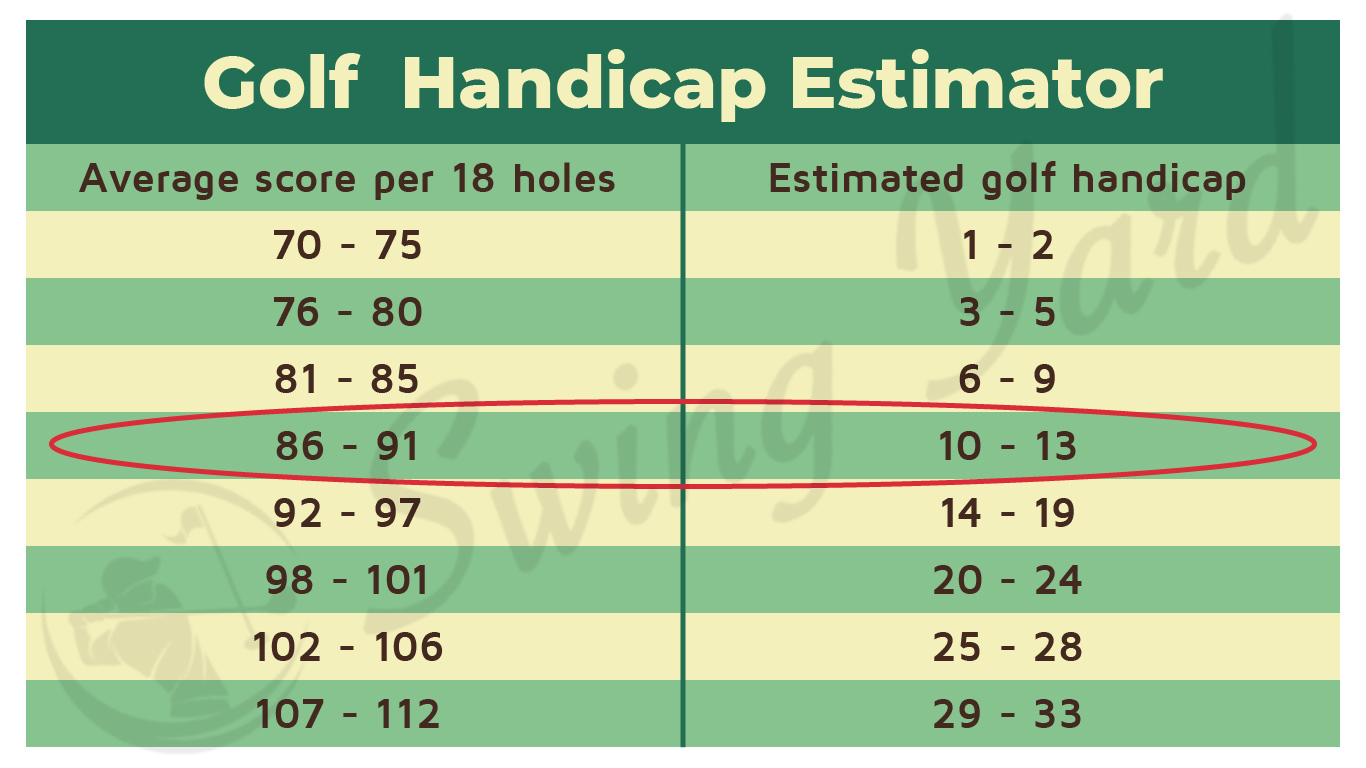
Breaking 90 in golf means that you will shoot lower than 90. Anywhere in the 80s or below is considered breaking 90 golf.
It is hard to break 90 in golf because you must make several pars during your round.”Making a few double bogeys means needing extra pars or birdies to catch up. Penalty strokes and missed putts make breaking 90 challenging.”
Some beginner players will break 90 in the first year they play. For most amateur golfers, it takes about three years to learn how to break 90 consistently. The more you play, the more experience you have and the easier it is to break 90.
Shooting 90 in golf is considered a respectable score, despite a few balls not staying in the fairway and some missed putts. It is a decent performance overall.
The average golfer can learn how to break 90, but it’s uncommon to consistently achieve this due to the difficulty of maintaining the required performance level over multiple rounds.
Final Thoughts – My Tips to Break 90
I hope you now feel as though you have read plenty of golf tips to break 90. Consistency, proper golf club fitting, and putting mastery are crucial for improving your game. Once you’ve mastered these aspects, you’ll start seeing lower scores more often.

Breaking 90 is a significant accomplishment, and it takes time, effort, and dedication. Once you do it a few times, you will start seeing scoring opportunities all over the place. Stay positive, as it will give you more confidence and take your game to an entirely new level. Before you know it, you’ll be ready to learn how to break 80!
Here’s a video Tips to Break 90 https://www.youtube.com/watch?v=X2OZu5mFz-s&pp=ygUXSG93IHRvIEJyZWFrIDkwIGluIEdvbGY%3D
Watch
New videos every week on our youtube channel




Leave a Comment