Skip to content
  • Instruction
  • Equipment & Reviews
  • Simulators & Tech
Subscribe
  • All Posts
  • All Instruction
  • Swing Tips
  • Drills & Techniques
  • Putting
  • Women’s Golf
  • Golf 101 (Beginners)
  • How Can I Fix My Slice: 7 Best Drills

    How Can I Fix My Slice: 7 Best Drills

  • What is Match Play in Golf?

    What is Match Play in Golf?

  • All Posts
  • All Equipment Reviews
  • Equipment By Year
  • Irons
  • Drivers
  • Putters
  • Balls & Accessories
  • Buyer’s Guides
  • Scotty Cameron Putters By Year

    Scotty Cameron Putters By Year

  • Callaway Quantum vs TaylorMade Qi4D (2026): Which Driver Is Longer?

    Callaway Quantum vs TaylorMade Qi4D (2026): Which Driver Is Longer?

  • All Posts
  • All Simulators & Tech
  • Build Your Own Simulator
  • Launch Monitors
  • Range Finders
Swing Tips
Drivers By Year
Golf for Beginners
Golf Simulators
    • See All Posts
    • Swing Tips
    • Drills & Techniques
    • Putting
    • Women’s Golf
    • Golf 101 (Beginners)
    • See All Posts
    • Drivers
    • Irons
    • Putters
    • Balls & Accessories
    • Buyer’s Guides
    • See All Posts
    • Build Your Own Simulator
    • Launch Monitors
    • Range Finders

Get Smarter About Your Swing

Please enable JavaScript in your browser to complete this form.
Loading

Get Smarter About Your Swing

Join thousands of golfers getting exclusive swing tips, club reviews, and gear guides straight to their inbox – before they hit the site.

Please enable JavaScript in your browser to complete this form.
Loading
All Posts | Equipment & Reviews | Putters | Scotty Cameron Putters By Year
Sep 16, 2026

by

Tim Bomgren

Scotty Cameron Putters By Year

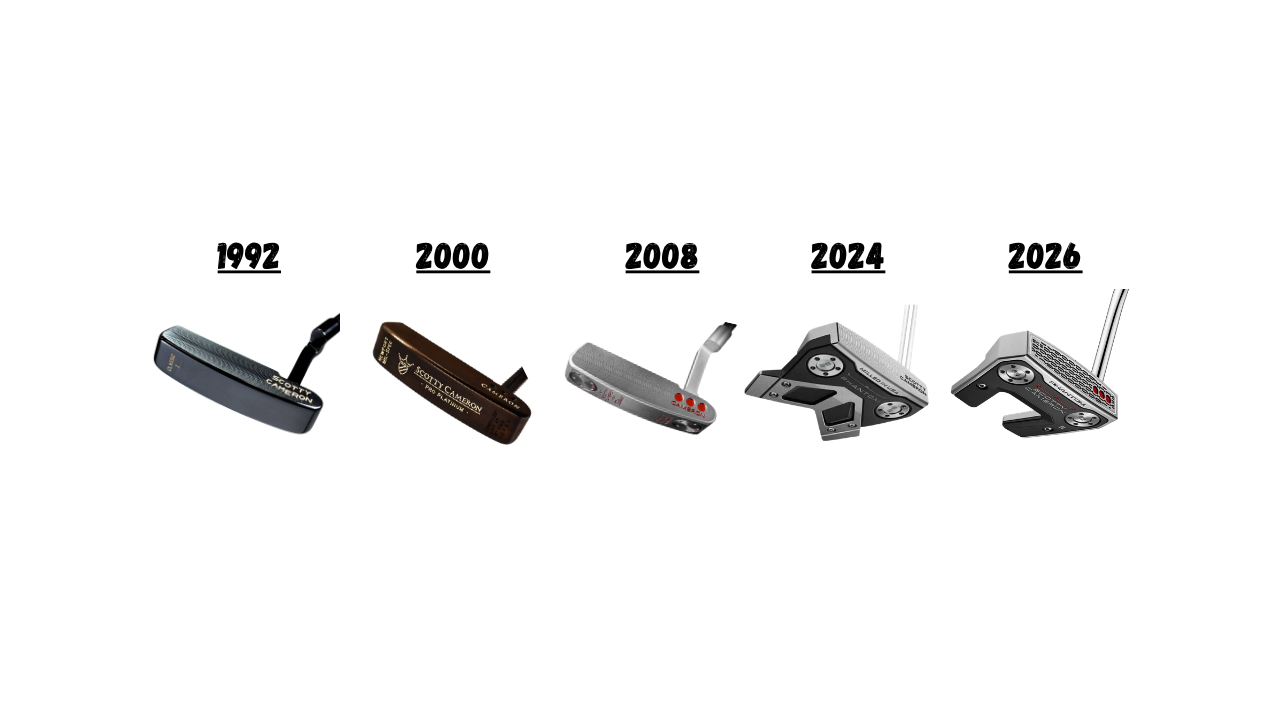
We break down the full history of Scotty Cameron putters from 1992 to 2026. See how each shape evolved year by year, from the original Newport blades to today’s Phantom mallets, then check the table to see exactly where your own putter fits in.

A look at many of the Scotty Cameron golf putters over the years

This post may include affiliate links. We do earn a commission for products purchased using these links (at no additional cost to you). Thank you for supporting Swing Yard, making the content you see on this blog possible. For more information, please see our privacy policy for details.


*Read our review guidelines.

Know a golfer who’d love this? Share it

Contents

  • Scotty Cameron Putters By Year Table:
  • The Origins: Don "Scotty" Cameron and the Birth of a Brand
  • The Titleist Era Begins and the Tiger Effect (1994–2002)
  • Expanding the Lineup: Studio, California, and the Mallet Revolution (2003–2014)
  • The Modern Era: Phantom X, Special Select, and Super Select (2019–2024)
  • Scotty Cameron Today: Collectibility, Tour Dominance, and a Legacy Cemented
  • Frequently Asked Questions (FAQ)
  • Other Brands Drivers By Year

Scotty Cameron putters (owned by Titleist) have been the gold standard on tour for over three decades, and this page breaks down every single model he’s ever made, from the earliest Classic blades all the way to the newest Phantom mallets. Whether you’re trying to date an old putter you found in the garage, comparing Newport shapes across the years, or just want to see how far the Phantom line has come since 2019, it’s all laid out below year by year.

Scotty Cameron Putters By Year Table:

Year ReleasedScotty Cameron Putter ModelClub AttributesPrice / Where to Buy
2026Phantom Continues the post-X Phantom lineage with further-refined high-MOI mallet shapes and updated milling, extending Scotty’s multi-material construction into its next generation. *Preferred Partner*
Studio Style Xperimental A boundary-pushing concept release exploring new shaping and milling ideas outside the standard production lineup, continuing Cameron’s tradition of prototype-driven innovation.
2025Phantom 5.2Refined update to the Phantom 5 blade shape with tightened tolerances and updated milling patterns for a slightly softer, more consistent feel.
Phantom 7.2Updated version of the Phantom 7 mid-mallet shape, carrying forward the same high-MOI multi-material build with refined face milling.
Phantom Black 5.5Blacked-out PVD finish applied to the low-bend, more toe-flowing 5.5 blade shape for a stealthier tour-inspired look.
Phantom Black 7Dark PVD-finished version of the Phantom 7 mid-mallet, pairing the same multi-material MOI boost with a blacked-out aesthetic.
Phantom Black 9.2RRefined, dark-finished evolution of the Phantom 9 mallet shape, denoted “R” for a face-balanced setup suited to straighter strokes.
Phantom Black 11Dark PVD version of the large Phantom 11 wingback mallet, built for maximum forgiveness with a tour-styled blacked-out look.
Studio Style Xperimental Fastback 2Second-generation Fastback mid-mallet shape released under the experimental Studio Style banner, testing updated milling and sole geometry.
Studio Style Xperimental Squareback 2Squareback 2’s angular, high-MOI mid-mallet shape reworked under the Xperimental line for updated face milling and finish.
2024Phantom 5Rebranded from Phantom X, dropping the “X” while keeping the blade-inspired multi-material shape and high-MOI perimeter construction.
Phantom 5.5Low-bend shaft version of the Phantom 5, adding toe flow for players with a more arcing stroke.
Phantom 5sCompact variant of the Phantom 5 blade shape, sized down for players wanting a smaller footprint at address.
Phantom 7Mid-mallet shape carried over from the Phantom X 7, refreshed under the simplified Phantom naming and updated milling.
Phantom 7.5Low-bend, more toe-flowing version of the Phantom 7 mid-mallet.
Phantom 9Larger mallet shape continuing the Phantom X 9’s high-MOI wingback profile under the new Phantom branding.
Phantom 9.5Low-bend toe-flow variant of the Phantom 9 mallet.
Phantom 11Largest wingback mallet in the 2024 lineup, built for maximum forgiveness and alignment.
Phantom 11 Long DesignArm-lock length version of the Phantom 11, extending the shaft and adjusting balance for anchored-style strokes.
Phantom 11.5Low-bend, added-toe-flow version of the Phantom 11 mallet.
2023Super Select NewportEvolution of the classic blade shape with improved face-milling patterns refining the Special Select generation that preceded it.
Super Select Newport PlusSlightly larger version of the Super Select Newport blade, adding a touch more forgiveness to the classic shape.
Super Select Newport 2Updated flared-back blade shape carrying Super Select’s refined milling into Cameron’s most iconic profile.
Super Select Newport 2 PlusEnlarged version of the Newport 2 shape for players wanting extra stability without leaving the blade category.
Super Select Newport 2.5 PlusFurther-enlarged Newport 2.5 variant, blending blade styling with added forgiveness for the Super Select generation.
Super Select Squareback 2Angular, high-MOI mid-mallet refreshed with Super Select’s updated milling and sole geometry.
Super Select GOLO 6Rounder, forgiving mallet shape updated with Super Select-era refinements to weighting and face milling.
Super Select GOLO 6.5Variant of the GOLO 6 mallet with adjusted specs, added to broaden the Super Select mallet lineup.
Super Select Del MarCompact, flow-neck mallet shape carried into the Super Select generation with updated milling.
Super Select Fastback 1.5Small-slant-neck mid-mallet refreshed under Super Select, keeping its toe-flow-friendly geometry.
2022Phantom X 5Second-generation Phantom X blade shape with refined multi-material construction over the original 2019 release.
Phantom X 5sCompact version of the Phantom X 5, introduced this generation for players wanting a smaller blade footprint.
Phantom X 5.5Low-bend, more toe-flowing variant of the updated Phantom X 5 blade shape.
Phantom X 7Refined mid-mallet shape carrying the second-generation Phantom X’s updated milling and weighting.
Phantom X 7.5Low-bend toe-flow version of the Phantom X 7 mid-mallet.
Phantom X 9Larger mallet shape refreshed for the 2022 Phantom X generation with updated face milling.
Phantom X 9.5Low-bend, added-toe-flow variant of the Phantom X 9 mallet.
Phantom X 11High-MOI wingback mallet carried into the second Phantom X generation with refined shaping.
Phantom X 11.5Low-bend toe-flow version of the Phantom X 11 mallet.
Phantom X 12Largest shape in the 2022 Phantom X lineup, built for maximum forgiveness and alignment support.
2021Special Select Newport 2 (refreshed)Updated version of the Special Select Newport 2 with further sole and milling refinements a year after its debut.
Special Select Newport 2 NotchbackIntroduced a notched back-flange design to the Newport 2 shape, adding a new alignment and weighting option to the blade family.
Special Select Squareback 2Continuation of the angular, high-MOI Squareback 2 mid-mallet within the Special Select lineup.
Special Select Del MarCompact flow-neck mallet carried forward in the Special Select family for another model year.
Special Select Fastback 1.5Small-slant-neck mid-mallet continuing in the Special Select lineup with consistent toe-flow geometry.
Special Select Flowback 5GOLO-inspired mid-mallet with a mid-bend, shaft-over-spud setup limiting toe flow for a more traditional feel.
Special Select Flowback 5.5Low-bend, more toe-flowing variant of the Flowback 5 mid-mallet.
2020Special Select Newport 2Debut of the Special Select line’s refreshed Newport 2 blade, adding updated sole geometry and a flow-neck hosel to the classic shape.
Special Select Newport 2 NotchbackFirst appearance of the notched-back-flange variant within the newly launched Special Select family.
Special Select Squareback 2Introduced the angular, high-MOI Squareback 2 mid-mallet as part of Special Select’s launch lineup.
Special Select Del MarCompact flow-neck mallet reintroduced as part of the 2020 Special Select relaunch.
Special Select Fastback 1.5Small-slant-neck mid-mallet brought into the new Special Select lineup at launch.
Special Select Flowback 5Debut of the Flowback shape within Special Select, offering a more traditional, lower-toe-flow alternative to Del Mar.
Special Select Flowback 5.5Low-bend companion to the new Flowback 5, added for players wanting more toe flow in the same shape.
2019Phantom X 5Launch of the Phantom X line’s blade-inspired shape, combining multi-material, high-MOI construction with a classic profile.
Phantom X 5.5Low-bend, added-toe-flow version of the debut Phantom X 5 blade shape.
Phantom X 7Mid-mallet shape introduced at Phantom X’s 2019 launch, built with the same high-MOI multi-material approach.
Phantom X 7.5Low-bend toe-flow variant of the original Phantom X 7 mid-mallet.
Phantom X 8Distinct mallet shape offered only in the first Phantom X generation, later phased out of subsequent lineups.
Phantom X 9Larger mallet shape debuting alongside the rest of the original Phantom X family in 2019.
Phantom X 9.5Low-bend, more toe-flowing version of the debut Phantom X 9 mallet.
Phantom X 11Large wingback mallet introduced at Phantom X’s launch for maximum forgiveness.
Phantom X 12Largest shape in the original 2019 Phantom X lineup, built for the highest MOI in the family.
2018Select Newport 2Continuation of the Select-era Newport 2 blade with incremental milling and sole refinements.
Select Newport 2.5Slightly enlarged Newport 2 variant offered within the 2018 Select lineup.
Select Newport 3New blade shape added to the Select Newport family, expanding the sizing options beyond the 2 and 2.5.
Select SquarebackAngular, high-MOI mid-mallet continuing in the Select lineup for the 2018 model year.
Select Del MarCompact flow-neck mallet carried forward within the Select family.
Select FastbackStandard mid-bend version of the milled-face, aluminum-sole Fastback mid-mallet.
Select Fastback 1.5Small-slant-neck, more toe-flowing variant of the Fastback shape.
Concept X (limited)Limited-release experimental mallet exploring new multi-material construction ideas ahead of the following year’s Phantom X launch.
2017Select Newport 2Standard Select-era Newport 2 blade carried into the 2017 model year.
Select Del MarCompact flow-neck mallet continuing within the Select lineup.
Select SquarebackHigh-MOI angular mid-mallet offered as part of the 2017 Select family.
GOLO 6Updated version of the rounded, forgiving GOLO mallet with revised weighting for the sixth generation of the shape.
Cameron & Crown Newport 2Tour-grade version of the Newport 2 blade offered under the premium Cameron & Crown sub-line.
Futura X (updated)Refined version of the multi-material Futura X wingback mallet with updated shaping.
2016Select Newport 2Blade shape continuing within the Select lineup for another model year.
Select Del MarCompact mallet carried forward in the 2016 Select family.
Select SquarebackHigh-MOI mid-mallet continuing as part of the Select lineup.
Cameron & Crown Newport 2Premium Cameron & Crown take on the Newport 2 blade, offered alongside the standard Select version.
Cameron & Crown Del MarTour-grade version of the Del Mar mallet released under the Cameron & Crown sub-line.
GOLO 5Fifth generation of the GOLO mallet shape, refining weighting and sole design from earlier versions.
GOLO 6Continuation of the sixth-generation GOLO mallet within the 2016 lineup.
2015Select Newport 2Blade shape offered within the Select lineup’s 2015 model year.
Select Del MarCompact mallet continuing in the Select family.
Select FastbackMilled-face, aluminum-sole mid-mallet offered in the 2015 Select lineup.
Select GoLo 5Select-branded version of the fifth-generation GOLO mallet shape.
GOLO 3Earlier generation of the GOLO mallet shape, offering a more compact profile than the later 5 and 6 versions.
GOLO 5Fifth-generation GOLO mallet continuing as a standalone offering in 2015.
GOLO 6Sixth-generation GOLO mallet offered alongside the GOLO 3 and 5 in the same model year.
Cameron & Crown Newport 2Premium tour-grade Newport 2 blade continuing under the Cameron & Crown sub-line.
Cameron & Crown Del MarTour-grade Del Mar mallet offered as part of the Cameron & Crown family.
Futura X5 / X5.5 / X6 / X7Multi-material wingback mallets extending the Futura X platform into four distinct sizes and toe-hang options for varying stroke styles.
2014Select Newport 2Blade shape continuing within the Select lineup for the 2014 model year.
Select GoLo 3Compact GOLO mallet shape offered under the Select branding.
Select GoLo 5Fifth-generation GOLO mallet offered as part of the Select lineup.
Select GoLo 6Sixth-generation GOLO mallet added to the 2014 Select family.
Select FastbackMilled-face mid-mallet continuing within the Select lineup.
Dual Balance Newport 2First application of Dual Balance counterweighting to the classic Newport 2 blade, adding grip-end weight and extra shaft length for stability.
Dual Balance Newport 2 MidSlantMid Slant neck version of the Dual Balance Newport 2, changing the offset and hosel style while keeping the counterbalanced setup.
2013Select Newport 2 NotchbackIntroduced a notched rear-flange detail to the Newport 2 blade within the Select lineup, an early appearance of the notchback concept.
Select FastbackStandard mid-bend Fastback mid-mallet continuing in the 2013 Select family.
Select Fastback 1.5Small-slant-neck, more toe-flowing Fastback variant offered the same year.
Select GoLo 3Compact GOLO mallet shape offered within the 2013 Select lineup.
Select GoLo 5Fifth-generation GOLO mallet continuing as part of the Select family.
California Del Mar (final year)Last model year for the California-era Del Mar mallet before the shape transitioned fully into the Select lineup.
2012Select NewportLaunch of the Select line’s take on the original Newport blade shape.
Select Newport 2Select-branded version of the flared-back Newport 2 blade at the family’s debut.
Select Newport 2.5Larger Newport 2 variant offered at the launch of the Select lineup.
Select SquarebackDebut of the angular, high-MOI Squareback mid-mallet shape within the new Select family.
Select GoLoOriginal GOLO mallet shape carried into the newly launched Select lineup.
Select GoLo 3Compact GOLO variant offered alongside the standard GoLo at Select’s launch.
Select GoLo 5Fifth-generation GOLO mallet introduced as part of the 2012 Select debut.
Select Mid Putter / Select Long PutterBelly and long-length versions of the Select shapes, built for anchored and counterbalanced stroke styles.
2011Studio Select Newport 2Refined version of the Newport 2 blade closing out the Studio Select era before the Select rebrand.
Studio Select SquarebackEarly appearance of the Squareback mid-mallet shape within the outgoing Studio Select lineup.
Circa 62 Charcoal MistDark-finished variant of the Circa 62 blade family, referencing Scotty’s 1962 birth year in its naming.
Red X Charcoal MistDark-finished version of the Red X mallet, the stainless-bodied design originally built for tour players wanting more forgiveness than a blade.
Newport DetourUnconventional mallet-adjacent design released alongside the Circa 62 refresh, exploring shaping outside Cameron’s typical blade lineage.
2010Studio Select SquarebackContinuation of the newly introduced Squareback mid-mallet within the Studio Select lineup.
Studio Select Newport 2Blade shape refined with subtle milling and sole updates for the 2010 Studio Select model year.
Studio Select KombiThree-point-weighted mallet built for belly-length putting, using a center sole weight bar and triangulated stainless weights.
California Del MarCompact, flow-neck mallet introduced as part of the California series’ launch lineup.
California HollywoodBlade-shaped model in the California series, one of five shapes named after California locations.
California MontereyBlade shape with a double-step flange back and engraved sight line within the California series.
California SonomaCompact mallet with a D-shaped back flange, part of the California series’ varied shape lineup.
2009Studio Select Newport 2 TimelessRefined Newport 2 blade carrying the “Timeless” name forward from earlier Studio Design-era releases.
Studio Select SquarebackDebut of the Squareback mid-mallet shape within the Studio Select lineup.
Studio Select KombiIntroduction of the three-point-weighted Kombi mallet built specifically for belly-putter players.
Studio Select Mid SlantHigh-toe-profile blade variant using a Mid Slant neck for a full shaft of offset.
2008Studio Select NewportBlade shape carried into the newly launched Studio Select lineup.
Studio Select Newport 2Flared-back Newport 2 blade offered at Studio Select’s 2008 launch.
Studio Select Newport 2.5Slightly larger Newport 2 variant introduced within the new Studio Select family.
Studio Select Newport 2 Mid SlantMid Slant neck version of the Newport 2, adding a full shaft of offset to the blade shape.
2007Newport 2 TimelessContinuation of the “Timeless” Newport 2 blade from the Studio Design era.
Studio Style NewportPrecision-milled classic blade shape offered under the Studio Style branding.
Futura (updated)Refined version of the original 2003 Futura mallet with updated horseshoe weighting and shaping.
2006Newport 2 TimelessBlade shape continuing within the Studio Design-era Timeless lineup.
Del MarEarly appearance of the Del Mar mallet name, predating its later use in the California and Select lineups.
Futura (updated)Further-refined version of the horseshoe-weighted Futura mallet.
2005Newport 2.5 Studio StyleEnlarged Newport 2 blade variant offered under the Studio Style name.
Futura IIIThird generation of the Futura mallet, continuing to refine its face-balanced horseshoe weighting.
CoronadoBlade-style model named after the California location, part of the era that preceded the dedicated California series.
2004Newport 2 TimelessStandard steel version of the flared-back Newport 2 blade carrying the Timeless name.
Newport 2 Timeless GSSGerman Stainless Steel insert version of the Newport 2 Timeless, adding a softer, tour-preferred face material.
Futura IISecond generation of the Futura mallet, refining the original’s face-balanced weighting.
2003FuturaDebut of Cameron’s first true mallet putter, using a face-balanced design with roughly three-quarters of its weight built into a stainless “horseshoe” perimeter.
Studio Stainless Newport 2Single-piece 303 stainless steel Newport 2 blade continuing the insert-free Studio Stainless construction.
Bullseye (Titleist re-release)Revival of the classic vintage Bullseye mallet shape under the Titleist-owned Cameron brand.
2002Studio Stainless Newport 2 (“My Girl”)Nicknamed Newport 2 release within the Studio Stainless line, milled from a single piece of 303 stainless steel with no face insert.
Studio Stainless NewportOriginal Newport blade shape in the same insert-free, single-piece stainless construction.
Studio Stainless BullseyeClassic Bullseye mallet shape reworked in Cameron’s insert-free stainless steel construction.
2001Studio Stainless NewportDebut of Cameron’s first mass-produced single-piece stainless steel putter, skipping the face insert used on earlier models.
Studio Stainless Newport 2Flared-back Newport 2 blade introduced in the same insert-free stainless construction.
BullseyeFirst Cameron-era take on the historic Bullseye mallet shape.
American Classic IIIBlade release under the American Classic naming, extending the original Classic shape lineage into a new sub-line.
2000Pro Platinum Newport 2 (Teryllium)Platinum-finished Newport 2 blade combining the soft-feeling Teryllium face insert with the Pro Platinum finish.
Mil-Spec #2Second Mil-Spec release, built to the tight tolerance milling standards that gave the sub-line its name.
Mil-Spec Newport 2Newport 2 blade produced to Mil-Spec’s tour-grade milling tolerances.
1999Studio Design NewportFirst Newport blade released under the Studio Design name, the first Cameron/Titleist line to drop the earlier “California” model naming.
Studio Design Newport 2Flared-back Newport 2 blade offered within the new Studio Design lineup.
Studio Design Newport 2.5Enlarged Newport 2 variant introduced as part of Studio Design’s debut lineup.
1998Pro Platinum Newport 2 Mil-SpecNewport 2 blade combining the Pro Platinum finish with Mil-Spec’s tight-tolerance milling standard.
Pro Platinum Newport 2.5 Mil-SpecEnlarged Newport 2.5 variant produced to the same Mil-Spec milling tolerances.
Mil-Spec #1First putter released under the Mil-Spec name, introducing the tight-tolerance milling standard that defined the sub-line.
1997Pro Platinum Newport M1Platinum-finished Newport blade marking an early milling generation (“M1”) within the Pro Platinum line.
Pro Platinum Newport 2 M1Flared-back Newport 2 blade sharing the same M1 milling generation as the standard Newport.
Pro Platinum Newport 2.5Enlarged Newport 2 variant offered within the Pro Platinum lineup.
TeI3 Newport Sole StampTour-specific Newport blade from the Teryllium-insert TeI3 line, identified by a distinct sole stamp used to mark tour issue heads.
1996Pro Platinum NewportDebut of the Pro Platinum finish applied to the classic Newport blade shape.
Pro Platinum Newport 2Pro Platinum finish extended to the flared-back Newport 2 blade.
Pro Platinum Newport PlusEnlarged Newport variant offered within the new Pro Platinum lineup.
1995TeI3 NewportFirst Titleist-era Newport blade to use the Teryllium insert, a soft-feeling face material that became a Cameron signature.
TeI3 Newport 2Flared-back Newport 2 blade sharing the same Teryllium insert construction.
TeI3 Newport PlusEnlarged Newport variant offered within the debut Teryllium-insert lineup.
1994Classic I (first Titleist-branded)First Classic I blade produced under Titleist ownership following Cameron’s 1994 signing.
Classic II (first Titleist-branded)Titleist-era version of the Classic II blade shape.
Classic III (first Titleist-branded)Titleist-era version of the Classic III blade shape, expanding the newly acquired lineup.
1993Classic IIIBlade shape added to the original Cameron Golf International Classic lineup before the Titleist acquisition.
Classic IVFourth shape in the pre-Titleist Classic blade family, rounding out Cameron’s earliest independent lineup.
1992Classic IOne of Scotty Cameron’s first production blade putters, launched as Cameron Golf International took shape.
Classic IISecond original Classic blade shape, part of the earliest independent Cameron lineup before the Titleist era began.

The Origins: Don “Scotty” Cameron and the Birth of a Brand

The story of Scotty Cameron putters begins not on a PGA Tour green, but in a California garage. Don T. “Scotty” Cameron, born in 1962 in Glendale, California, grew up fascinated by the craft of putter-making, learning the trade alongside his father at an early age. By the late 1980s, Cameron was already collaborating with equipment manufacturers like Ray Cook Golf — where he helped develop the Blue Goose, widely considered the first mass-produced, fully milled and gun-blued putter.

In 1991, Cameron struck out on his own, creating putters under his name for companies including Maxfli, Cleveland, and notably Mizuno, where he developed the Classic I and Classic II. In late 1992, he and his wife Kathy formally launched Cameron Golf International, and the Scotty Cameron Classic line was born. The brand’s early breakthrough came at the 1993 Masters, when Bernhard Langer famously won with a Cameron-designed Classic I prototype — thrusting the relatively unknown craftsman into the global spotlight and kickstarting what would become one of golf’s most storied equipment brands.

The Titleist Era Begins and the Tiger Effect (1994–2002)

In August 1994, Titleist outbid five other companies to sign Scotty Cameron exclusively, forever aligning his name with the Acushnet Company and the Titleist brand. The first Titleist-branded Scotty Cameron putters hit the market in 1995 under the TeI3 (Teryllium Insert) name, featuring soft-feeling inserts in classic blade and Anser-style heads. But it was the 1997 Masters that truly exploded the brand’s profile.
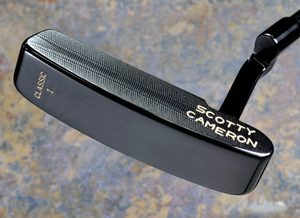
The original Scotty Cameron Classic 1 Putter
Image Credit: Scotty Cameron

A young Tiger Woods arrived at Augusta National wielding a Cameron TeI3 Newport — famously fitted with white elastomer dots and a signature “Cherry Dot” sight mark — and proceeded to win by 12 strokes in one of the most dominant major performances ever recorded. When Tiger continued his run of dominance into 1999 and 2000 using a Pro Platinum and later a German Stainless Steel (GSS) Newport 2 — a putter he would carry through 14 of his 15 major championships — the Cameron brand became permanently synonymous with elite performance. By 2001 and 2002, Cameron introduced the Bullseye and Studio Stainless lines, broadening beyond the Anser-blade tradition into iconic nostalgic shapes and the first mass-market stainless-steel offerings. The Circle T pro-model culture and dot-stamping collector community that blossomed during this era remains vibrant to this day.

Expanding the Lineup: Studio, California, and the Mallet Revolution (2003–2014)

Throughout the 2000s, Cameron steadily broadened his lineup while maintaining the precision craftsmanship that defined the brand. The Futura — first introduced in 2003 — marked Scotty Cameron’s serious entry into the mallet-style putter market, offering a dramatically different silhouette from the traditional blade models. The Studio Select and California series, launched between 2008 and 2011, brought refined shaping and updated materials to both blades and mid-mallets. The California line introduced more accessible price points and visually modern aesthetics, with named models like the Hollywood, Del Mar, Sonoma, and Monterey giving each head its own identity.

Get Smarter About Your Swing

Join thousands of golfers getting exclusive swing tips, club reviews, and gear guides straight to their inbox – before they hit the site.
Please enable JavaScript in your browser to complete this form.
Loading
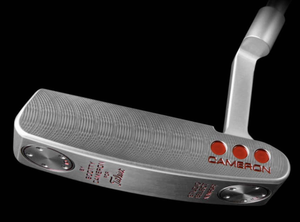
An image of the original Scotty Cameron Newport putter
Image Credit: Scotty Cameron

The Select series, debuting in 2012, became one of the most enduring families Cameron ever produced — featuring updated Newport shapes alongside innovative new designs like the GoLo and Squareback. The Dual Balance series, introduced in 2014, addressed the growing interest in counterbalanced putting by adding weight to the grip end for added stability, finding a following among armlock and long-putter advocates.

The Modern Era: Phantom X, Special Select, and Super Select (2019–2024)

The release of the Phantom X line in 2019 marked a decisive new chapter for Scotty Cameron, as the brand pushed boldly into the large-mallet category for the first time at this scale. Thanks to its high-MOI, multi-material construction and bold geometric shapes, the Phantom X quickly drew in players who wanted the Cameron name and craftsmanship in a more forgiving, modern format. Building on that momentum, the Special Select series of 2020 then refreshed the beloved classic blade and small-mallet shapes with updated sole geometry and flow-neck hosels, successfully reintroducing timeless models like the Newport 2, Flowback, and Squareback 2 for a new generation.
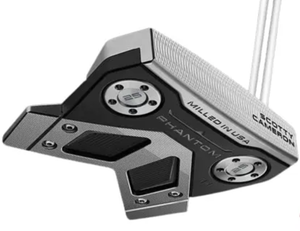
An image of the 2024 Titleist Scotty Cameron Phantom X golf putter
Image Credit: 2nd Swing

Just a few years later, in 2023, the Super Select line further evolved those same designs with improved face-milling patterns and refined aesthetics, continuing the brand’s pattern of incremental but meaningful refinement. Then, in 2024, the Phantom series was rebranded and updated once more — this time dropping the “X” designation entirely — resulting in a cleaner, more evolved lineup of high-MOI mallets that now extends into long-design (arm-lock) configurations. Most recently, that evolution continued into 2025 with the introduction of refined sub-models like the Phantom 5.2 and 7.2, demonstrating that Cameron’s commitment to innovation shows no signs of slowing down.

Scotty Cameron Today: Collectibility, Tour Dominance, and a Legacy Cemented

Few brands in any sport command the combination of emotional loyalty, collector passion, and tour-level credibility that Scotty Cameron has built over three decades. As of 2026, Cameron putters remain the most-used brand on the PGA Tour by a significant margin, with players across generations trusting the blade and mallet designs from the first putt of the week to the last. The collector market for vintage and limited-edition Camerons is robust and highly specialized — Tour-issue Circle T putters, GSS models, and prototype blades regularly sell for thousands, and occasionally tens of thousands, of dollars.

Watch

New videos every week on our youtube channel
Join us on YouTube
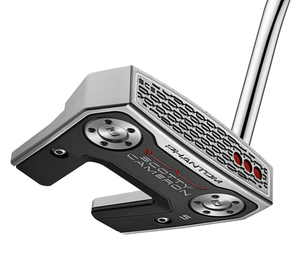
An image of the Titleist Scotty Cameron 2026 Phantom 5 Putter
Image Credit: 2nd Swing

The Scotty Cameron Custom Shop, housed at the Putter Studio in Carlsbad, California, offers custom finishing, restoration, and personalization services that deepen the loyalty of the brand’s dedicated following. Whether you’re a tour professional relying on a Newport 2 to sink pressure putts, or a weekend golfer who saved up for their first Cameron, the name carries a weight in the golf world that few equipment brands — in any category — can genuinely claim.


Frequently Asked Questions (FAQ)

How do I tell what year my Scotty Cameron putter is from?

Start with the model name stamped on the sole or flange, since Cameron rarely reuses a name without changing the era around it. A Newport 2 stamped “Pro Platinum” or “TeI3” points to the late 90s, while one marked “Studio Select” or “Special Select” is 2008 or later. Cross-reference that name against the table above and you’ll usually land within a year or two, especially once you factor in finish, insert material, and hosel style.

What’s the difference between a Scotty Cameron blade and a mallet?

Blades like the Newport are compact, toe-weighted heads built for players who like to feel and manipulate the putter face through the stroke. Mallets like the Phantom or Futura spread more weight around the perimeter for a higher MOI, which resists twisting on off-center hits and tends to suit a straighter, more mechanical stroke. Neither is “better,” it really comes down to how your stroke moves and how much forgiveness you want to give up for feel.

What does GSS mean on a Scotty Cameron putter?

GSS stands for German Stainless Steel, a softer-feeling face material Cameron used on select late-90s and early-2000s Newport models. Tiger Woods famously carried a GSS Newport 2 through most of his major wins, which turned these into some of the most sought-after putters from that era. If you find one with the original headcover and no face wear, it’s worth having appraised before you clean it up.

Are older Scotty Cameron putters worth more than new ones?

Sometimes, but it depends heavily on which model and what condition it’s in. Tour-issue Circle T putters, limited Teryllium releases, and anything tied to a major championship win can sell for well above retail, while a standard production Select or Studio Style from the same decade might only fetch a modest resale price. Rarity and provenance matter far more than age alone.

What’s a Circle T Scotty Cameron putter?

A Circle T is a tour-only putter stamped with a small circled “T,” marking it as a hand-built model made specifically for a touring professional rather than the general public. These heads often carry unique specs, finishes, or milling not found on any retail version, which is exactly why the collector market chases them so hard. If a putter has a Circle T stamp, it never came from a normal retail run.

What’s the difference between Phantom X and the current Phantom line?

Phantom X launched in 2019 as Cameron’s first real push into large, high-MOI mallets built with multi-material construction. In 2024, the line was renamed simply “Phantom,” dropping the X while carrying the same core shapes forward with updated milling and a few new configurations like arm-lock lengths. So if you’re comparing a 2019 Phantom X 11 to a 2024 Phantom 11, you’re looking at the same shape family a few generations apart, not two unrelated lines.

Which Scotty Cameron putter does Tiger Woods use?

Tiger has carried a Cameron Newport 2 through the vast majority of his career, including 14 of his 15 major championships, moving through Pro Platinum, GSS, and various tour-issue versions of that same shape over the years. It’s one of the biggest reasons the Newport 2 is considered the brand’s signature model. Plenty of newer shapes have come along since, but that putter’s track record is hard to argue with.

Can I get a Scotty Cameron putter customized or restored?

Yes, Cameron’s Custom Shop at the Putter Studio in Carlsbad handles everything from full restorations on vintage models to custom stamping, paint fill, and finish work on newer putters. It’s a popular route for golfers who want to bring an old Newport or Del Mar back to life, or add a personal touch to a current model. Turnaround and pricing vary by the scope of work, so it’s worth reaching out directly for a quote.

Other Brands Drivers By Year

PING

PUTTERS By Year

Know a golfer who’d love this? Share it

Tim Bomgren Avatar
Tim Bomgren
What Drives the Team at Swing Yard

Welcome to Swing Yard

As golf obsessed patrons ourselves, we are a passionate, collaborative team of professional instructors and equipment testers.

More About the Team

Join us on socials

Trending Articles

  • How to Shallow the Golf Club

    How-To

    How to Shallow the Golf Club

  • How to Read a Green in Golf

    Putting

    How to Read a Green in Golf

Browse Categories

Equipment By Year Equipment By Year
Golf 101 (Beginners) Golf 101 (Beginners)
Simulators & Tech Simulators & Tech
Drivers Drivers

Leave a Comment Cancel reply

We’d love to hear what you think! Or if you have any suggestions to share.

Your email address will not be published. Required fields are marked *


You May Also Like

Different PING putter models throughout PING's life cycle as a company
Putters

PING Putters By Year

5 different putters all different putter types
Buyer's Guides

Different Types of Putters: Which head styles are best for you?

multiple different putter heads next to each other
Buyer's Guides

Best Putters for Beginners

An image of the TaylorMade spider insert putter
Putters

Milled vs Insert Putters: 6 Differences You Must Know

Golf tips, gear reviews, and real results made for everyday golfers.

  • Instruction
  • Simulators & Tech
  • About
  • Equipment & Reviews
  • Contact
  • Review Guidelines
Please enable JavaScript in your browser to complete this form.
Loading

Website by Saevil Row + Made To Thrive

© 2026 Swing Yard. All Rights Reserved.

Privacy. Terms.