This post may include affiliate links. We do earn a commission for products purchased using these links (at no additional cost to you). Thank you for supporting Swing Yard, making the content you see on this blog possible. For more information, please see our privacy policy for details.
*Read our review guidelines.
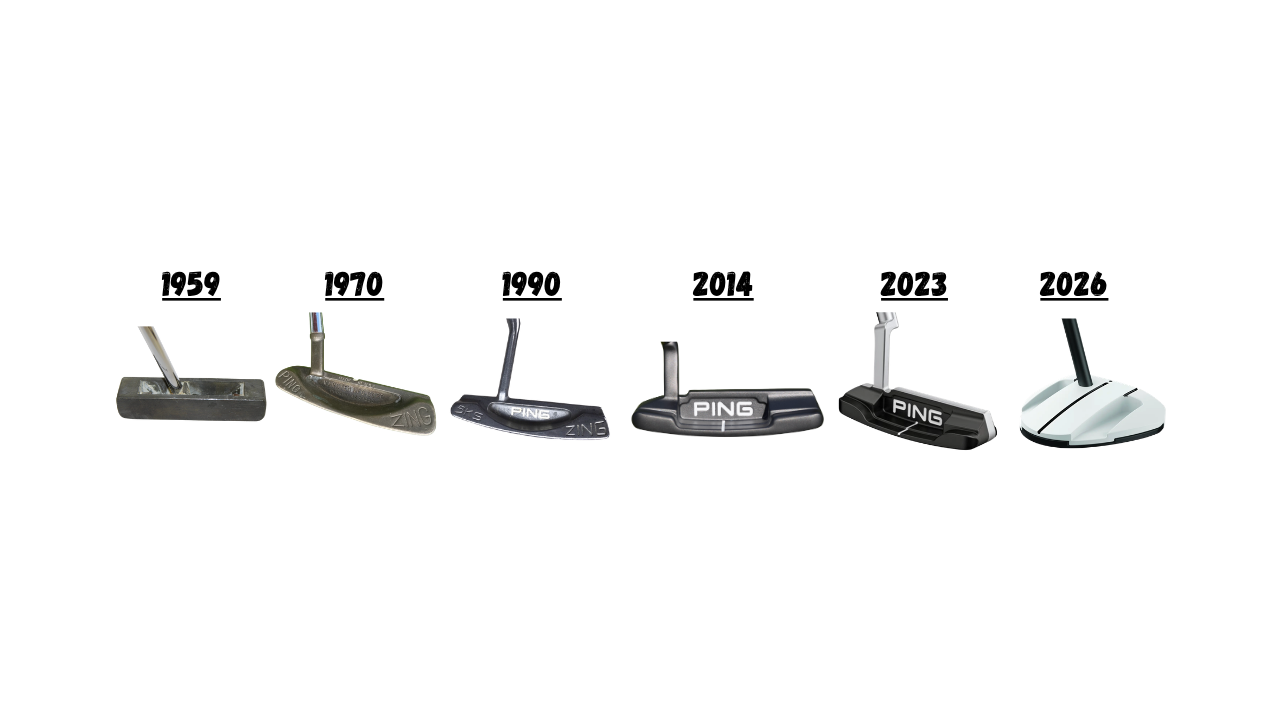
PING got its start when Karsten Solheim sketched the original Anser putter on a 78 rpm record sleeve in January 1966 and received a patent in March 1967. That simple drawing — along with the early Anser, 1A, 2A, 3A, 4A, and 5A models that followed through the mid-1970s — introduced heel-toe weighting and forever changed how putters were designed.
Nearly sixty years later, PING’s 2026 lineup continues that same spirit of purposeful innovation. They continue to release new innovative models year after year.
PING Putters Over the Last 5 Years
2026
PING’s 2026 putter release is built around something genuinely new for the brand: Eye-Q alignment. The Scottsdale TEC line pairs a dot-and-line combo meant to give your eyes a single anchor point over the ball. PING says it helps quiet the mind before you take the putter back. This entire line also got a fresh white finish, a big change from it’s standard silver.
The Scottsdale TEC models use a milled aluminum body with a stainless steel sole plate to push weight low and around the perimeter, and a two-layer PEBAX face insert for a softer, quieter strike. Tony Finau, Viktor Hovland, and Billy Horschel have all already been spotted gaming one.
2025
2025 was a PLD Milled year through and through. PING added three new models, the Anser 30, Anser 4D, and Kushin, growing the PLD Milled family to 15 total putters since its public debut in 2022.
The Anser 30 is a long-neck take on the original design that changes toe hang just enough to fit a “tweener” stroke between straight and slight-arc. The Anser 4D looks like a blade but plays like a mid-mallet because of it’s deeper perimeter weighting. The Kushin is the widest-bodied option of the three, built for a straight-back-straight-through stroke.
2024
PLD Milled Anser: The standard-bearer of the PLD Milled family got a gunmetal finish and PING’s Deep AMP face milling. Each head taking roughly four hours on the mill to complete.
PING PLD Milled Anser 2D: Tony Finau’s preferred shape. Deepened slightly for a bit more forgiveness without losing the classic Anser 2 silhouette.
PLD Milled DS72: Viktor Hovland’s face-balanced mid-mallet, built with a wide top rail and generous cavity for near-automatic alignment.
PING also introduced PLD Milled Plus this year. A customizer tool on their site that lets golfers choose alignment aids, paint fill, custom graphics, and grip colors to build a one-of-a-kind putter.
2019-2023
This stretch is when PING really opened the floodgates on putter variety. The Sigma G and Sigma 2 lines brought True Roll face technology to nine and eight models respectively. Ultimately, giving golfers a soft-feel option in nearly every head shape PING made.
Get Smarter About Your Swing
Join thousands of golfers getting exclusive swing tips, club reviews, and gear guides straight to their inbox – before they hit the site.
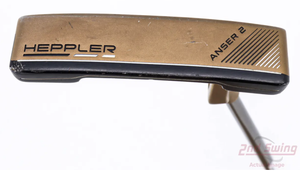
2021’s Heppler line is arguably the most beloved of the bunch, six total models and still in bags today. In 2022, PING opened its once “tour-only” PLD Milled program to the public for the first time.
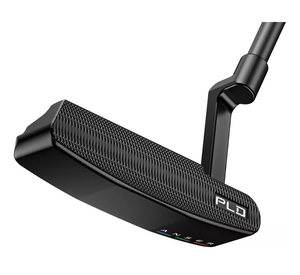
By 2023, PING released a full line of putters without giving it an official name. Literally, just calling it the “New PING Putters” on their site. Odd move for an industry built on marketing. However, the putters themselves, especially the updated Anser and Anser 2, held up wonderfully.
PING Anser Putters by Year
No PING putter story is complete without the Anser getting its own section. Introduced in January 1966, it was patented the following year. It’s the shape that every heel-toe, plumber’s-neck blade putter made since has borrowed from in one way or another.
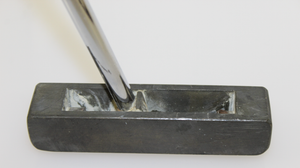
Solheim’s patent expired in 1984, which is why so many other manufacturers now sell an “Anser-style” putter. That said, PING has obviously re-released the shape dozens of times since.
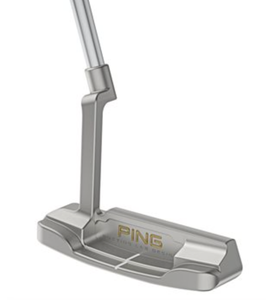
What’s kept it relevant for nearly 60 years is the toe hang. A slight-arc putting stroke naturally wants a putter that opens and closes through the swing. The Anser’s heel-toe weighting does exactly that without any gimmicks.
PING Putters History
PING’s entire company started with a putter, not an iron or a driver. In 1959, Karsten Solheim, a General Electric engineer and frustrated weekend golfer, built the 1A in his garage. He named it PING for the bright, metallic sound it made when the ball came off the face just right.
The real turning point came seven years later. In January 1966, Solheim sketched a new design on the dust jacket of a 78 rpm record. His wife, Louise, suggested calling it the “Anser,” an answer to every other putter on the market, and shortening it so the name would fit on the toe. Karsten pushed back at first, but the name stuck. Wives are always right…
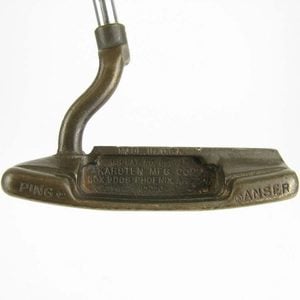
The early Ansers were made from brass, a soft metal that dented easily. Something Arnold Palmer found out firsthand on a putting green when he handed Solheim a caved-in face. Durability issues aside, tour players couldn’t ignore how it performed. George Archer won the 1969 Masters with an Anser in his bag, and by the time the patent expired in 1984, it had already become the most copied putter shape in golf.
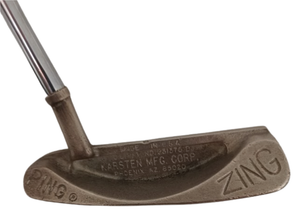
PING spent the next few decades expanding well beyond the Anser, adding the B60 mallet in 1980, the multi-metal Isopur and Craz-E lines in the late 90s, and the fully milled Redwood series in 2006. The 2022 launch of the public PLD Milled program brought the company full circle, giving everyday golfers access to the same tour-validated putter-building process PING’s own staff had used for years.
How Often Does PING Release New Putters
For the first two decades of the company’s history, PING barely changed its putter lineup at all. The 1A through 5A blades carried the brand from 1959 through the mid-1970s with only minor tweaks between them.
Watch
New videos every week on our youtube channel
That pace picked up dramatically once the Anser patent expired and PING needed to keep differentiating itself. By the late 90s and early 2000s, the brand was juggling seven or eight models at once. Also testing different materials like beryllium copper and stainless steel to hit different feel profiles. Today, PING typically refreshes its putter wall once or twice a year. Alternating between the tech-forward PLD Milled and Scottsdale TEC lines and more accessible multi-material releases.
Frequently Asked Questions (FAQ)
The newest PING putter, as of 2026, is the Scottsdale TEC line, including the Ketsch Onset and Ally Blue Onset. These putters introduce PING’s Eye-Q alignment technology, a dot-and-line combo designed to give golfers a single visual anchor point, built into a milled aluminum body with a stainless steel sole plate and a two-layer PEBAX face insert.
The PING Anser was introduced in January 1966 and patented in March 1967. Karsten Solheim sketched the original design on the dust jacket of a 78 rpm record, and his wife Louise suggested the name Anser, short for answer, since the full word wouldn’t fit on the toe of the club.
PLD Milled putters are 100% CNC milled from forged 303 stainless steel, giving a firmer, more precise feel favored by better players and tour staff. Scottsdale TEC putters use a multi-material build with a milled aluminum body, stainless steel sole plate, and a PEBAX face insert, prioritizing forgiveness and a softer feel along with the new Eye-Q alignment system. If you want tour-level precision, go PLD. If you want forgiveness and a quieter sound, go Scottsdale TEC.
The first PING putter was the 1A, built by Karsten Solheim in his home garage in 1959. It predates the company’s famous Anser design by seven years and is also where the PING name itself came from, based on the sound the putter made when it struck the ball cleanly.
Tour players currently gravitate toward the PLD Milled family, especially the DS72 played by Viktor Hovland and the Anser 2D favored by Tony Finau. Billy Horschel has also been seen gaming the newer Scottsdale TEC Ketsch Onset. The classic Anser and Anser 2 shapes remain popular across the tour more broadly, decades after their original release.
Design patents in the United States typically run for a set term, and Karsten Solheim’s original Anser patent, granted in March 1967, expired in 1984. Once it lapsed, other manufacturers were free to produce their own heel-toe, plumber’s-neck putters, which is why so many Anser-style putters exist across the industry today.
The Sigma 2 line, released in 2020, introduced an adjustable-length shaft and a dual-durometer face insert across eight models. The Heppler line, released in 2021, moved to PING’s TR (True Roll) face technology for more consistent ball speed on off-center hits, and included six distinct head shapes like the Tomcat 14 and Piper Armlock. Heppler is generally considered the more refined, feel-focused evolution of the Sigma 2 concept.
PING typically refreshes its putter lineup once or twice a year now, alternating between updates to the PLD Milled tour-inspired line and more accessible multi-material lines like Scottsdale TEC. In the company’s early decades, from 1959 through the mid-1970s, putter models barely changed at all, and it wasn’t until after the Anser patent expired in 1984 that new releases became a near-annual event.
Yes, especially the Heppler and Sigma 2 lines, which can often be found well below retail and still hold up against current releases in terms of feel and forgiveness. Vintage Ansers from the 60s and 70s have also become genuine collector’s items, so if you find an old one in good condition, it may be worth more as a keepsake than as a gamer.


Leave a Comment