This post may include affiliate links. We do earn a commission for products purchased using these links (at no additional cost to you). Thank you for supporting Swing Yard, making the content you see on this blog possible. For more information, please see our privacy policy for details.
*Read our review guidelines.
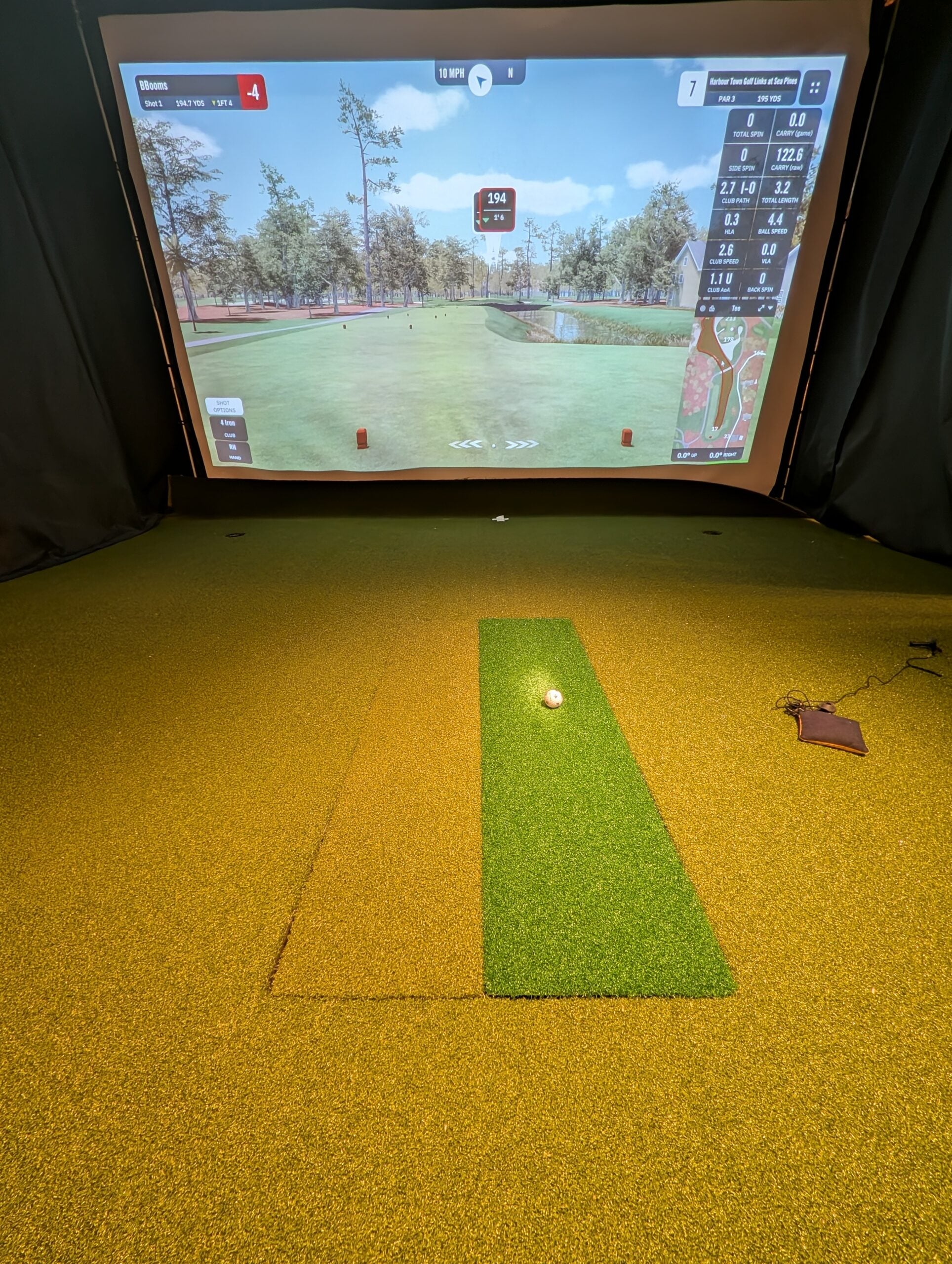
I’ve been using the Bullseye 3D Hitting Strip in my simulator for several months now, and it’s earned itself a permanent spot. If you’ve been shopping for a hitting strip and keep seeing Bullseye come up in forums and build threads, I can tell you the reputation is well-earned — but let’s break down exactly what I like about it and if this hitting strip will suit your needs.
The hitting surface is one of the most underrated decisions in any home golf simulator build. Most people agonize over launch monitors and projectors and then throw down whatever mat comes bundled with their enclosure. That’s a mistake. A bad hitting surface causes real joint damage on heavy strikes and gives you feedback that trains your swing in the wrong direction. If you plan to put serious volume through your simulator, this decision matters more than almost anything else in your setup.
What Is The Bullseye 3D Hitting Strip?
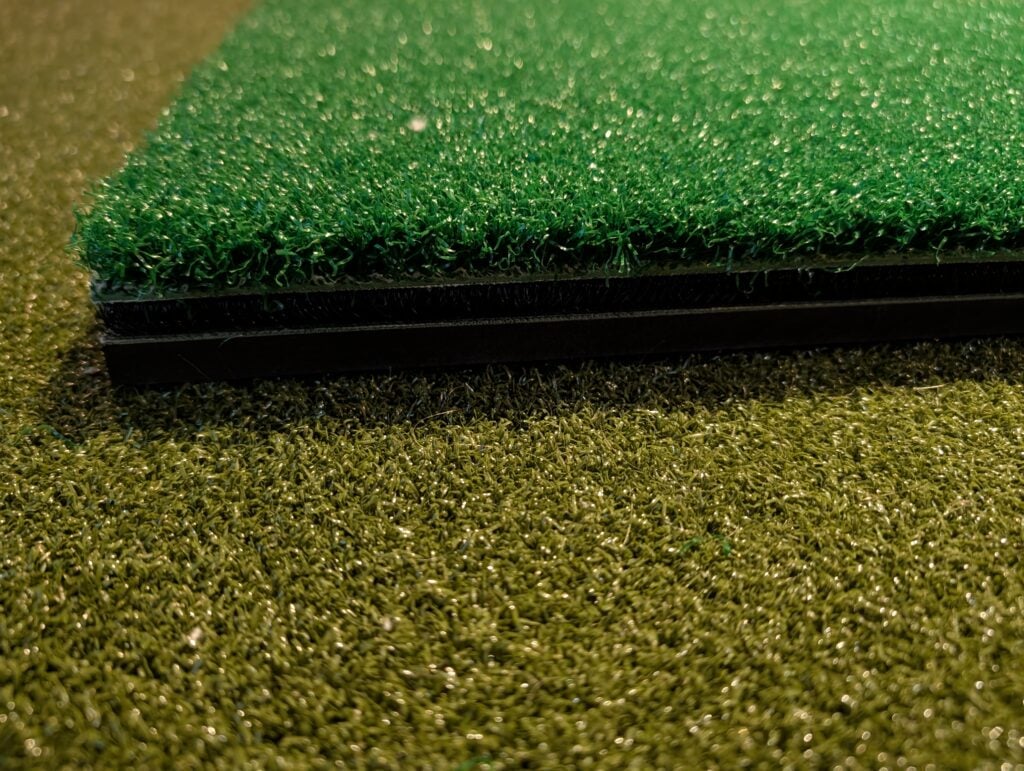
The Bullseye 3D is a premium hitting strip made by Bullseye Golf Sims, a Canadian company that has quietly built a strong following in the simulator community. The “3D” refers to the construction: a tight, short-blade woven nylon turf sits on top of a 3D shock-absorbing mesh layer, which acts like a spring to absorb impact energy. Below that is a premium rubber base that grips whatever surface you’re mounting it on.
It’s available in multiple sizes — I tested the 12″ x 36″ insert size, which drops directly into most standard combo mat frames — and comes in at roughly $169-439 USD depending on size, making it one of the more affordable premium strips on the market.
Bullseye makes three strips in total: the original, the Soft Strike, and this 3D. The 3D is the firmest of the three and is specifically designed for players with a steep angle of attack. If you drive the club into the turf, the 3D bounces back rather than grabbing your club head. This has been my problem using mats like the SIGPRO Softy, especially when hitting shorter wedge shots without much clubhead speed.
Does It Feel Realistic?
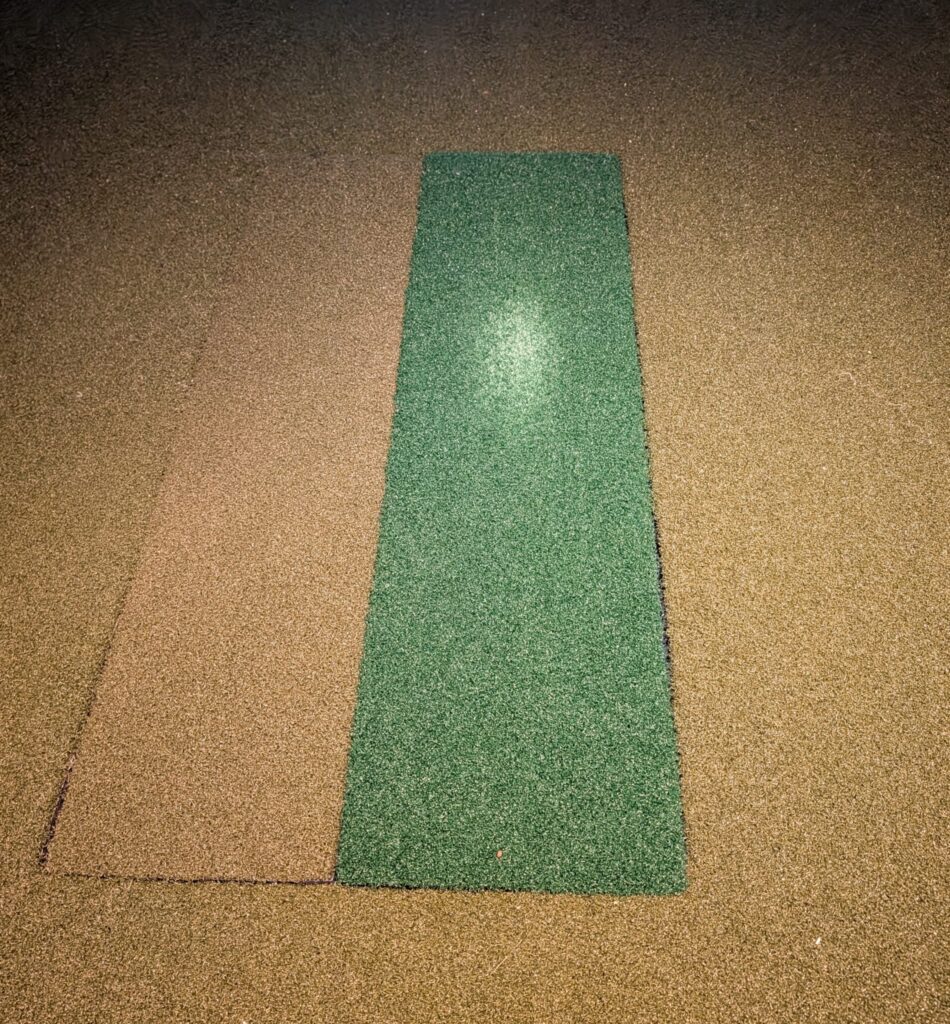
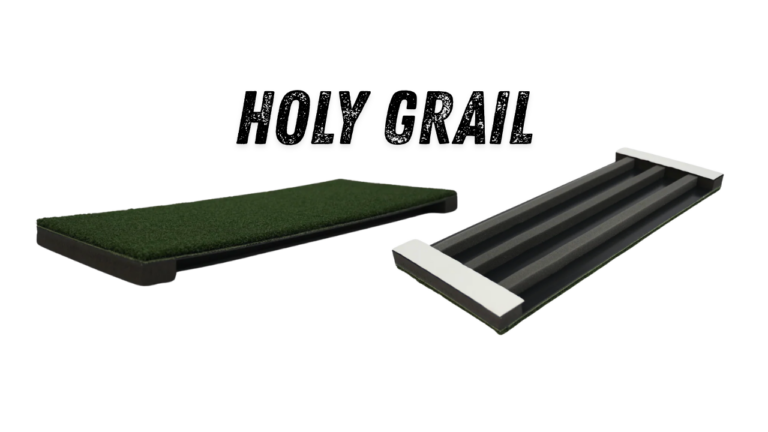
The first thing I noticed stepping onto the 3D is that it’s firmer than I expected. It simulates a tight lie — think a well-mown fairway or a firm links turf — rather than the softer, more cushioned feel of something like the SIGPRO Softy or the bristly Fiberbuilt grass series. If you’re used to hitting off a lush, grabby mat, the 3D will feel different at first but it’s also comparable with that of the Holy Grail hitting strip.
What I genuinely loved was how little club grab there is. Most hitting strips — even good ones — create some amount of resistance when the club catches the turf, especially on chunkier strikes. On the 3D, the club just glides through. The nylon blade is short and the 3D mesh underneath springs back rather than clamping down. For me, this translated to noticeably less wrist and elbow stress after high-volume sessions, which is exactly what I was hoping to find.
Fat shots still get punished — the strip won’t mask poor strikes the way a super-soft mat does — but the feedback arrives as a bump and bounce rather than the jarring stop you get from rubber-heavy mats. Additionally, I’ve used extremely soft hitting strips like the Fiberbuilt grass series or the soft strike which allow you to almost completely slide the club underneath the ball. You don’t want to sacrifice a realistic feel just to protect your wrists and elbows – and you shouldn’t need to.
One honest note: the 3D does not accept a real tee. The turf blade is too short and tight. If tee shots are a big part of your practice routine, you’ll need to use a rubber tee insert or a mat with a built-in tee hole alongside the strip. For irons and wedges, it’s a non-issue.
Durability
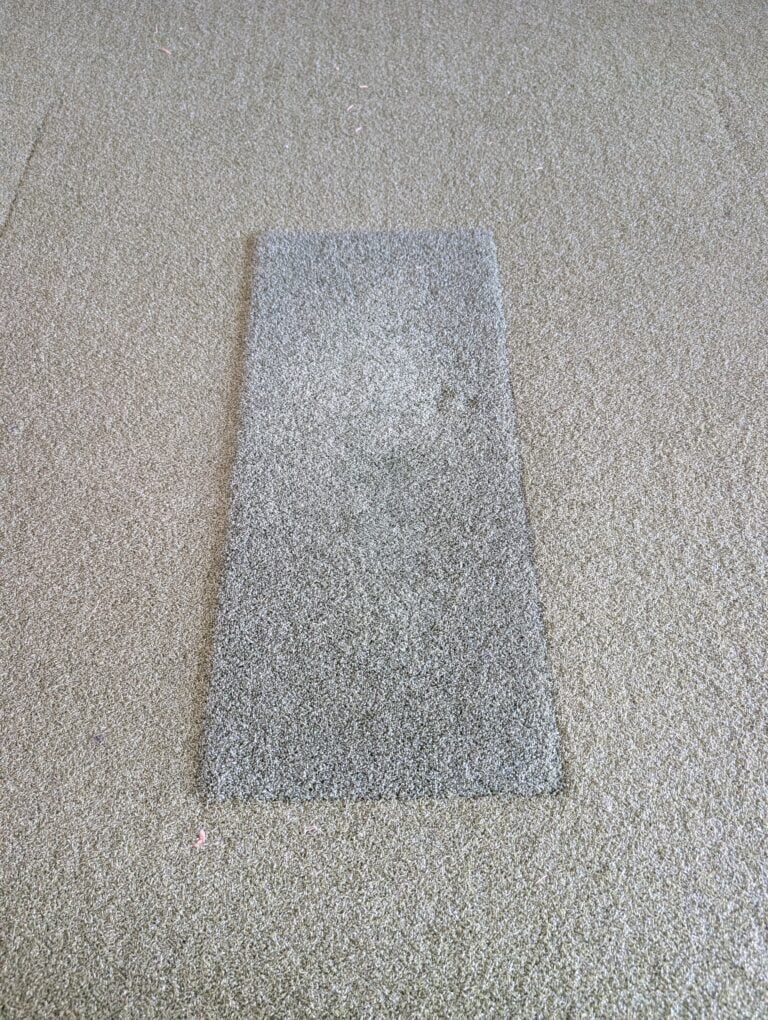
After several months of heavy use — I’m hitting 150-200 shots per session on average — I can see no meaningful wear on the turf surface. I see visible wear, like the turf has been brushed many times (visible in the images) but no degradation of turf quality. The nylon construction feels genuinely high quality. Multiple community members report their Bullseye strips lasting well over a year of regular use without visible degradation. This is consistent with what I’ve seen so far.
Get Smarter About Your Swing
Join thousands of golfers getting exclusive swing tips, club reviews, and gear guides straight to their inbox – before they hit the site.
The rubber base has stayed firmly in place throughout testing with no creeping or bunching, which is a common complaint with cheaper strips.
Pros and Cons
Pros
- Minimal club grab — significantly easier on wrists, elbows, and shoulders than most mats
- Huge range of sizes available to fit almost any install
- Tight-lie feel is realistic for a steep angle of attack
- The 3D shock-absorbing mesh genuinely cushions fat shots without masking feedback
- Strong durability — turf shows no meaningful wear after heavy use
- Non-slip rubber base stays in place
- Affordable — strong value relative to the competition
- Works well for putting — putts roll cleanly off the surface
- Fits directly into Fiberbuilt combo mats and most standard mat frames
Cons
- Does not accept a real tee — the turf is too short
- Firmness may not suit golfers with a very shallow, sweeping swing style
- Bright green color is polarizing — it’s noticeably vivid compared to most mats
- No warranty beyond transit damage or manufacturing defects
- Ships from Canada, so international buyers should confirm shipping costs upfront
Bullseye 3D vs. SIGPRO Softy: Which Should You Choose?
I’ve spent many months with both mats. After reviewing the SIGPRO Softy here on Swing Yard, the comparison is worth addressing directly because these two strips target slightly different golfers.
| Bullseye 3D | SIGPRO Softy | |
|---|---|---|
| Feel | Firm — tight lie | Soft — lush fairway |
| Club grab | Minimal | Low-moderate |
| Best for swing type | Steep angle of attack | Neutral to shallow |
| Accepts real tee | No | Yes |
| Joint friendliness | Excellent | Excellent |
| Putting | Good | Good |
| Price | ~$169-400 | ~$175–$225 |
The short version: if you have a steep, descending attack angle — which describes most amateur golfers hitting irons — the Bullseye 3D is the better fit. The minimal grab and springback mesh are purpose-built for that strike pattern. If your swing is shallower and you want something that feels closer to hitting off soft turf, or you frequently tee up irons for driver practice, the SIGPRO Softy is the more versatile pick.
Plenty of simulator owners I’ve talked to actually run both — rotating strips week to week for different feels and to minimize wear on any single surface. At these price points, that’s a genuinely reasonable approach.
How It Fits Into a Home Simulator Setup
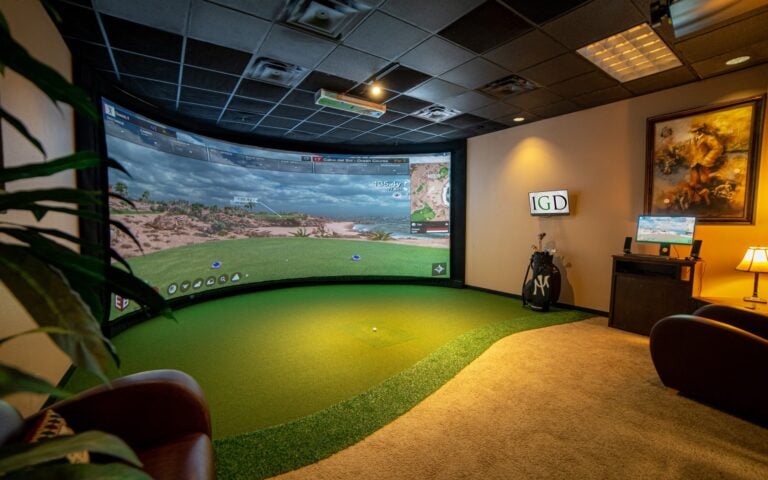
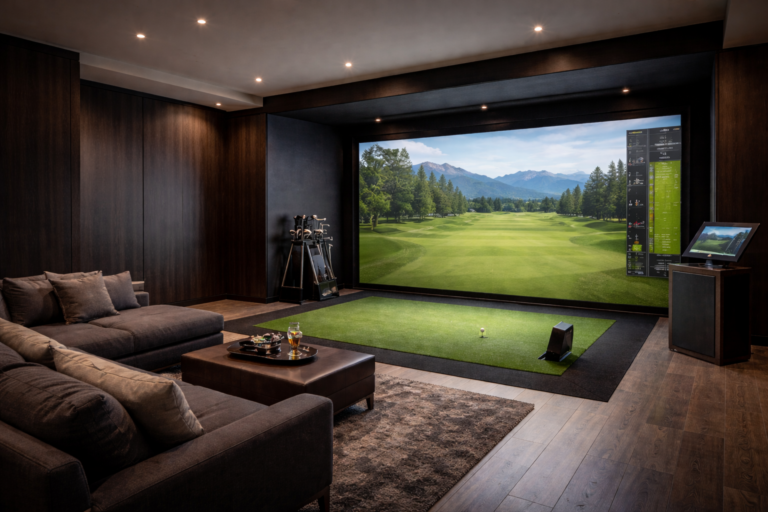
The Bullseye 3D drops cleanly into most standard combo mat frames, including Fiberbuilt. The height matches common mat heights well, so there’s no awkward lip or step when transitioning from the stance mat to the hitting strip. For anyone putting together a complete setup, our best home golf simulators guide covers the full picture of how hitting mats and strips fit into different build tiers — the surface choice genuinely varies depending on what launch monitor you’re running and how your bay is configured. I had to build mine up a little bit because I had already installed a Sigpro Softy in my turf setup which is a much higher mat.
One thing worth noting for camera-based launch monitor users: the bright green color of the Bullseye 3D has been flagged by some GC3 users as occasionally causing ball-detection issues in lower-light environments. If you’re running a camera-based unit, test your shot recognition early in your setup before committing to a full session.
My Verdict
The Bullseye 3D is one of the best hitting strips available for golfers with a steep angle of attack. It’s among the most joint-friendly surfaces I’ve tested at any price. The no-grab club interaction, the durable nylon construction, and the 3D shock-absorbing mesh all do exactly what they’re advertised to do.
The firmness and the lack of real tee support are legitimate limitations. However, they won’t suit every swing style or every practice routine. But for high-volume iron and wedge work in a home simulator, I’d buy it again without hesitation. Additionally, I use the K2 golf tees, so the tee issue described above is of no concern to me.
Watch
New videos every week on our youtube channel
Rating: 4.4 / 5
Frequently Asked Questions
The 3D is firmer, has a shorter turf blade, and is designed for players with a steep angle of attack. It won’t grab the club on fat strikes and feels like a tight lie. The Soft Strike is softer and more forgiving, better suited to neutral or shallow swings, and accepts a real tee. If you’re unsure, the Soft Strike is the more versatile of the two for most recreational golfers.
It works with radar-based units without any issues. Some camera-based launch monitor users — particularly GC3 owners — have reported occasional ball-detection problems in dimly lit rooms, likely related to the strip’s bright green color. Test shot recognition in your specific setup early before committing to heavy sessions.
No. The turf is too short and firm to hold a real tee. You’ll need a rubber tee insert or a mat with a built-in tee location if tee shots are part of your practice.
The Bullseye 3D is designed to drop directly into standard combo mat frames. Most Fiberbuilt combo mats accommodate it cleanly. Measure your insert slot before ordering to confirm the right size.

Leave a Comment